The sudden onset of Bell's palsy is frightening. One side of the face droops, an eye will not close properly, speaking and eating become awkward, and it can be hard not to fear the worst. The reassuring news is that most cases improve, and that recovery often goes more smoothly with the right support started early. At Yuan Qi Acupuncture Center in Business Bay, we use acupuncture and Traditional Chinese Medicine to support recovery from Bell's palsy & facial paralysis, working to ease the nerve inflammation and reawaken the affected muscles.
Bell's palsy is a sudden weakness or paralysis of the muscles on one side of the face, caused by inflammation, compression or a viral effect on the seventh cranial nerve, the nerve that controls facial expression. In Traditional Chinese Medicine, it is seen as a sudden invasion of Wind-Cold into the channels of the face, which obstructs the flow of Qi and blood and leaves the facial muscles slack. Treatment aims to clear that obstruction and restore circulation and function to the face.
Bell's Palsy & Facial Paralysis · Business Bay clinic
We reply within working hours. Your details are only used to contact you.
Bell's palsy is most often linked to inflammation of the facial nerve, frequently following a viral infection, which causes the nerve to swell within the narrow bony channel it passes through and disrupts the signals to the facial muscles. The result is the sudden, one-sided drooping that defines the condition. Stress, fatigue, cold exposure and a recent viral illness are all commonly associated with its onset.
Because the facial nerve controls so much, Bell's palsy can also bring secondary effects such as changes in taste, increased or reduced tearing, sensitivity to sound, and difficulty closing the eye. Whatever the trigger, the timing of treatment matters more here than with almost any other condition we see, which is why we encourage people to come in as soon as symptoms appear.
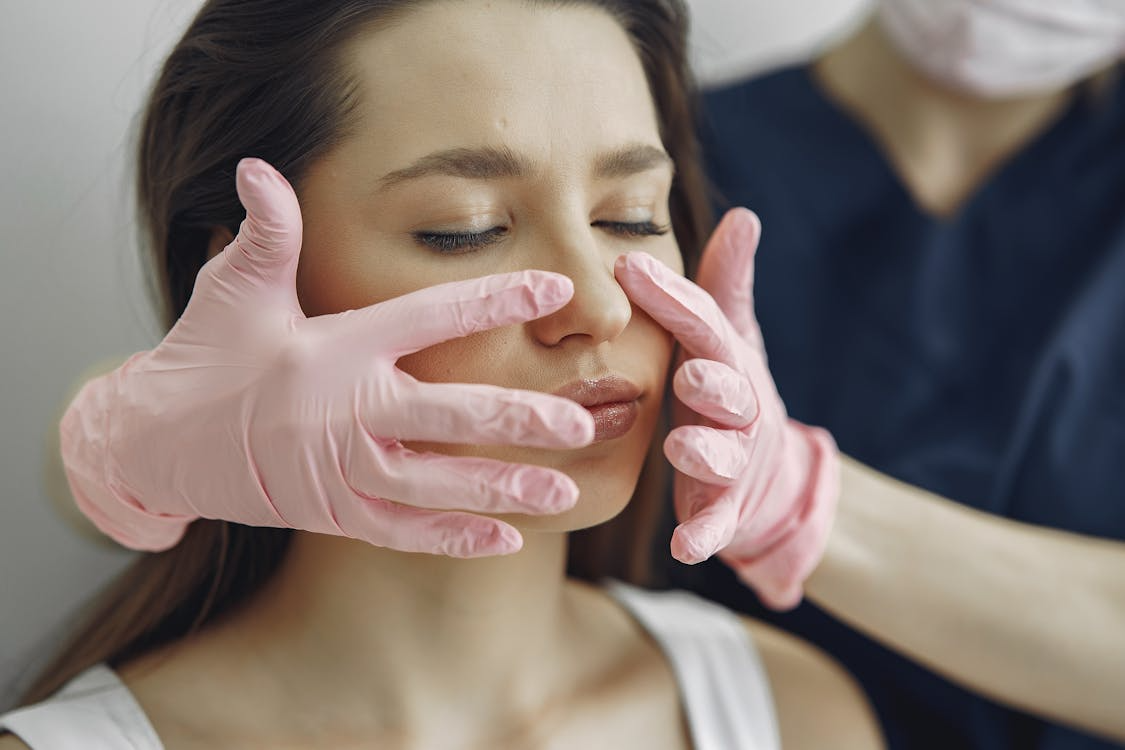
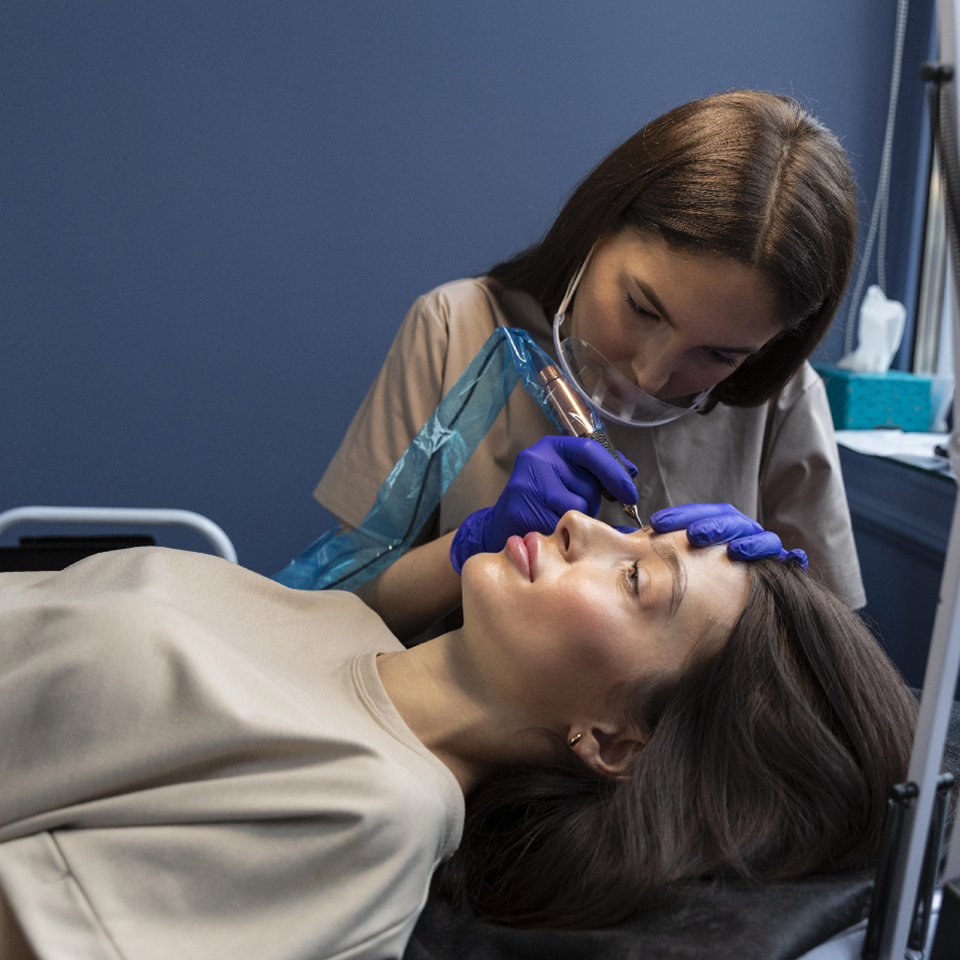
Acupuncture supports Bell's palsy recovery by placing very fine, sterile needles at specific points on the affected side of the face to stimulate the facial nerve and the muscles around it, improve local blood flow, and reduce the inflammation pressing on the nerve. Better circulation delivers oxygen and nutrients to the recovering tissue, while the stimulation helps keep the facial muscles active so they are less likely to waste while the nerve is recovering. The aim is to encourage the nerve's natural healing and help movement and symmetry return.
For Bell's palsy and facial paralysis we often combine acupuncture with complementary therapies in the same session, guided by the assessment:
Treatment also takes care of the secondary symptoms, such as changes in taste or excess tearing, and works to keep the muscle memory active so that as the nerve recovers, the face can return to natural movement and expression. We work alongside any medical treatment you are receiving, not in place of it.
Facial nerve problems show up in several ways. At the clinic we regularly help with these.
Acute Bell's palsy with sudden one-sided facial drooping.
Difficulty closing the eye or raising the eyebrow on one side.
Long-standing or incomplete facial paralysis that has not fully recovered.
Synkinesis, where facial movements trigger unwanted movements elsewhere on the face.
Facial muscle stiffness, tightness and asymmetry.
Secondary effects such as changes in taste or altered tearing.
Facial and neurological recovery often go together — we also offer stroke rehabilitation and treat migraine & headache.
Your first visit begins with an assessment. We ask when the symptoms began, how the weakness has progressed, which parts of the face are affected, any secondary symptoms, and your medical history, including any medication you have been prescribed. In keeping with Chinese medicine we usually check your tongue and pulse too. Because Bell's palsy recovery is so time-sensitive, we also explain why starting treatment early matters.
Facial acupuncture uses especially fine needles suited to the delicate areas of the face, and most people feel little more than a small pinch. You then rest with the needles in place for around twenty to thirty minutes. Afterwards we explain what we found and give you a realistic idea of the likely course of treatment, which for Bell's palsy is usually a structured schedule over several weeks.
A clinical practice run by a DHA & MOH licensed doctor — not a spa offering a quick fix.
*Ideally treatment starts within the first 48 to 72 hours of symptoms appearing, though later treatment can still help. Outcomes vary from person to person.
I visited for spinal treatment and I'm extremely satisfied. The massage and cupping really helped my back pain — the therapists are skilled, knowledgeable and gentle.
 Husnain Awan
Verified · Google
Husnain Awan
Verified · Google
A great experience — acupuncture, massage and cupping in one session. Relaxing and effective, can't wait for the next. Special thanks to Ms. Lei for being so friendly!
 Kyla Galita
Verified · Google
Kyla Galita
Verified · Google
Amazing physiotherapy experience with Ms. Archina! Professional, kind and attentive. Thanks to her care I saw great improvement in a short time. Highly recommend!
 Angeli Orpilla
Verified · Google
Angeli Orpilla
Verified · Google
If you or someone close to you has developed sudden facial weakness, it is worth acting quickly, and you do not need a referral to see us. Yuan Qi Acupuncture Center is in the Sheikh Majid Building on Sheikh Zayed Road in Business Bay, easy to reach from Downtown, Al Wasl and Jumeirah. Call or message on WhatsApp at +971 50 288 4479 and we will find you an early appointment. Your first consultation is included when you book a course of treatment.
Yes. Acupuncture is widely used to support Bell's palsy recovery. It stimulates the facial nerve and muscles, improves local circulation and helps reduce the inflammation affecting the nerve, which supports the return of movement and symmetry.
As early as possible. Ideally, treatment starts within the first 48 to 72 hours of symptoms appearing. Early care helps reduce nerve inflammation and supports a quicker, more complete recovery, though later treatment can still help.
Yes. Early treatment gives the quickest results, but patients with longer-standing facial paralysis can also improve. Treatment works to retrain the affected nerve pathways, relax tight muscles and reduce synkinesis.
The fine needles stimulate the facial nerve and the muscles it controls, increasing local blood flow and reducing the inflammation around the nerve. This supports the body's own healing of the nerve and helps keep the facial muscles active while it recovers.
Many patients notice gradual signs of muscle movement returning within three to four weeks. A typical course is around two sessions per week for six to eight weeks, adjusted to how you respond. We confirm your plan after the assessment.
Synkinesis is when one facial movement triggers an unwanted movement elsewhere, such as the eye closing when you smile, often after Bell's palsy. Treatment works to relax the overactive muscles and help retrain the nerve pathways to reduce it.
Most people feel very little. Facial acupuncture uses especially fine needles suited to delicate areas. You may feel a small pinch, and the treatment is generally very gentle.
Yes. Acupuncture is used as a complement to medical treatment for Bell's palsy, not a replacement. Tell us what you have been prescribed, and we work alongside your doctor's care.
Difficulty closing the eye is a common symptom, and supporting the recovery of the muscles around the eye is part of treatment. In the meantime, follow your doctor's advice on protecting the eye while it cannot fully close.
Yes. Treatment also addresses secondary effects such as changes in taste, altered tearing and facial tightness, alongside working on the muscle weakness itself.
Yes, when performed by a licensed practitioner with sterile, single-use needles. Side effects are minor, usually slight bruising at a point. Our clinic follows DHA standards.
Keeping the facial muscles active is one of the aims of treatment. The stimulation helps maintain muscle activity and tone while the nerve recovers, which supports a fuller return of movement.
Most people with Bell's palsy recover well, though the extent and speed vary from person to person. Treatment aims to support the best possible recovery, especially when started early, but outcomes cannot be guaranteed.
Stress, fatigue, cold exposure and recent viral illness are commonly associated with the onset of Bell's palsy. Supporting your overall health is part of how we approach recovery.
We assess when symptoms began, how they have progressed, which parts of the face are affected, any secondary symptoms and your history, and usually check your tongue and pulse. Then treatment begins, and we explain the likely course.
Plan for around 45 minutes to an hour for a first visit, including the assessment. The needles are usually left in place for about 20 to 30 minutes while you rest.
Come with a clean face, free of heavy makeup if possible so we can work on the facial points, and bring details of any medication you have been prescribed for the condition.
Acupuncture can be suitable across a range of ages, with treatment adapted to the individual. Tell us about the patient's age and health during the assessment so we can plan appropriately.
No referral is needed. Given how time-sensitive Bell's palsy is, you can book directly by phone, WhatsApp or through our website and we will arrange an early appointment.
Call or message us on WhatsApp at +971 50 288 4479, or use the booking form on this page, and we will confirm an early time for you.