When your jaw hurts, you notice it with almost every word and every meal. TMJ syndrome can turn eating, talking and even yawning into something uncomfortable, often with clicking, stiffness, or a jaw that feels like it might lock. At Yuan Qi Acupuncture Center in Business Bay, we treat TMJ syndrome and jaw pain with acupuncture and Traditional Chinese Medicine that works to calm the overworked muscles around the jaw and ease the tension behind the pain.
TMJ stands for the temporomandibular joint, the hinge that connects your jaw to your skull just in front of each ear. When the muscles and joint on either side are strained or out of balance, the result is pain, clicking and restricted movement. In Traditional Chinese Medicine this is understood as a blockage of Qi and blood in the meridians that run around the face, jaw and ears, and treatment aims to clear that blockage so the jaw can move comfortably again.
TMJ Syndrome & Jaw Pain · Business Bay clinic
We reply within working hours. Your details are only used to contact you.
TMJ pain usually comes from strain or imbalance in the muscles and joint that control the jaw, often driven by teeth grinding, jaw clenching, stress, or misalignment in the bite. Because we clench when we are tense, a great deal of TMJ trouble is linked to stress that the body holds in the jaw, neck and shoulders, frequently without the person realising they are doing it, especially at night.
In Dubai we see jaw pain triggered by long, high-pressure working hours, stress, nighttime teeth grinding, and tension that builds across the neck and jaw from desk and screen work. Because the jaw, neck and chewing muscles are all connected, TMJ pain often comes hand in hand with tension headaches and earache, which is part of why it can be so wearing.
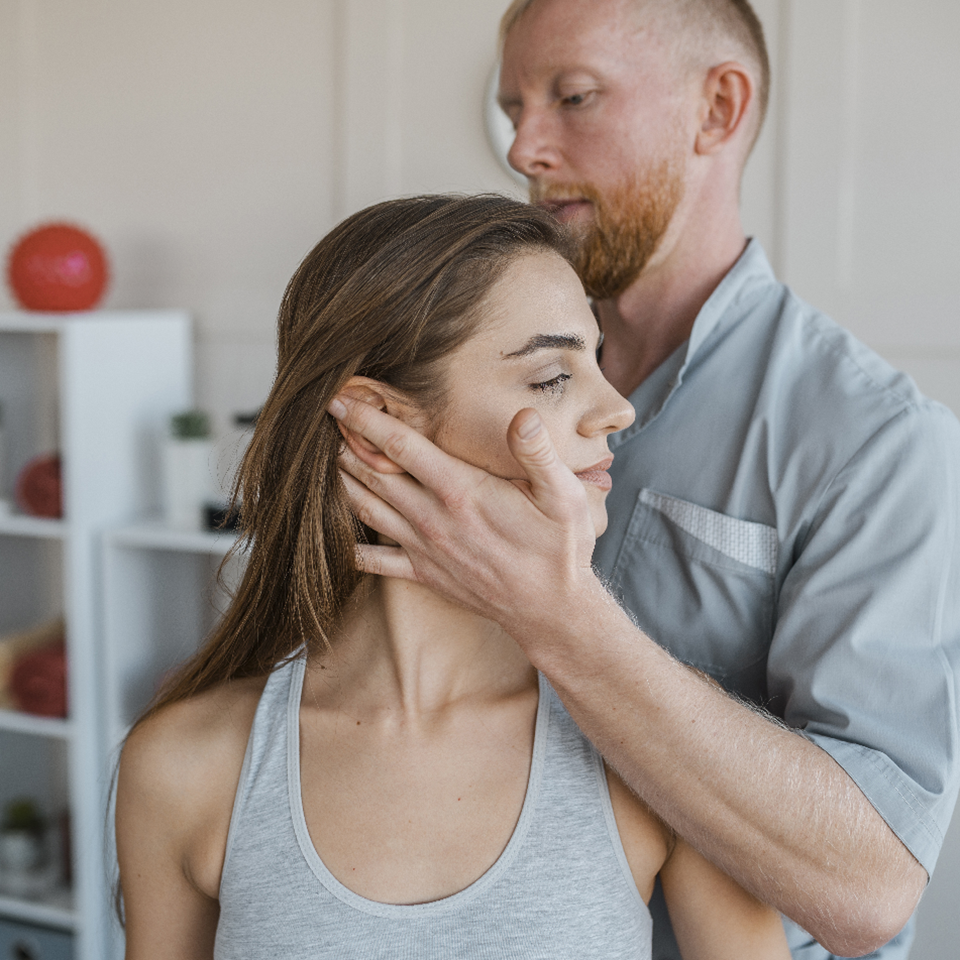
Acupuncture treats TMJ pain by placing very fine needles at specific points around the jaw, temples and neck to signal the nervous system to relax the overactive chewing muscles. As those muscles release and circulation improves, the tension on both sides of the jaw begins to even out, which reduces pain, eases clicking, and helps the joint move more smoothly along its normal path. Because the chewing muscles connect up to the temples, easing them often relieves the headaches that come with TMJ as well.
For TMJ and jaw pain we often combine acupuncture with complementary therapies in the same session, guided by the assessment:
Over a regular course of treatment, the aim is to settle the muscle pattern that drives the clenching and grinding, rather than only easing a flare-up. Calming the nervous system also helps, since much of the tension behind TMJ is stress that the body keeps returning to the jaw.
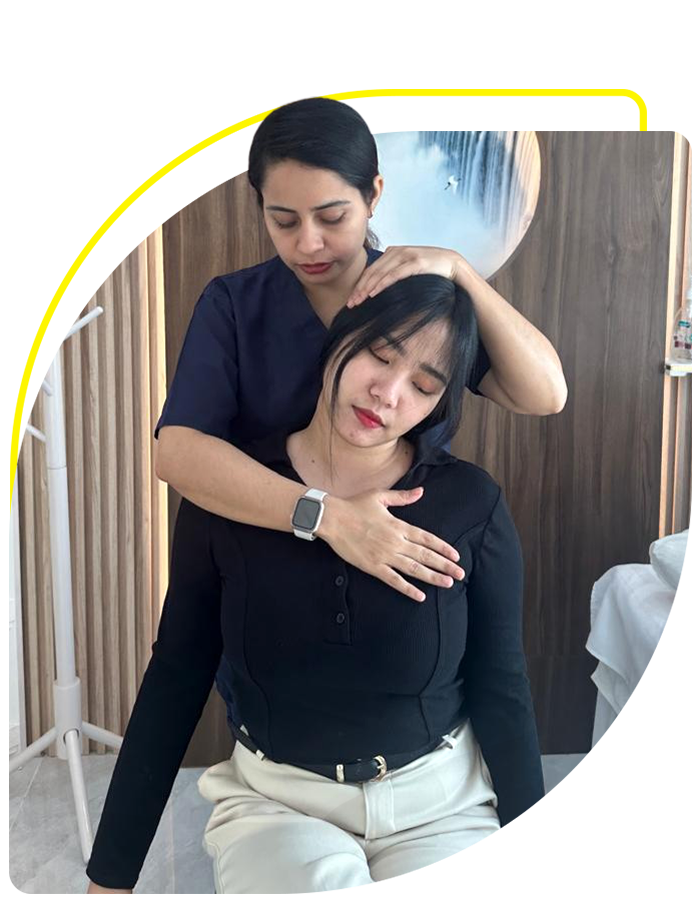
TMJ syndrome shows up in several ways. At the clinic we regularly help with these.
Jaw pain and tenderness around the joint and chewing muscles.
Clicking, popping or grating sounds when opening the mouth.
A jaw that feels stiff, tight or like it may lock.
Pain linked to teeth grinding and jaw clenching, including at night.
Earache and facial tension that comes with jaw strain.
Much of the tension behind TMJ is stress the body holds in the jaw — we also treat tension headaches and anxiety & stress.
Your first visit begins with an assessment. We ask about your jaw pain, when it started, whether you grind or clench, any clicking or locking, your stress and sleep, and your medical history. In keeping with Chinese medicine we usually check your tongue and pulse too. Because facial points are involved, we take particular care to explain what we are doing before we begin.
Facial acupuncture uses especially fine needles suited to delicate areas, and most people feel little more than a small pinch. You then rest with the needles in place for around twenty to thirty minutes, which most patients find calming. Afterwards we explain what we found and give you a realistic idea of how many sessions your jaw is likely to need, so you know what to expect.
A clinical practice run by a DHA & MOH licensed doctor — not a spa offering a quick fix.
*Most patients feel less jaw tension after the first session. We confirm your plan after the assessment.
I visited for spinal treatment and I'm extremely satisfied. The massage and cupping really helped my back pain — the therapists are skilled, knowledgeable and gentle.
 Husnain Awan
Verified · Google
Husnain Awan
Verified · Google
A great experience — acupuncture, massage and cupping in one session. Relaxing and effective, can't wait for the next. Special thanks to Ms. Lei for being so friendly!
 Kyla Galita
Verified · Google
Kyla Galita
Verified · Google
Amazing physiotherapy experience with Ms. Archina! Professional, kind and attentive. Thanks to her care I saw great improvement in a short time. Highly recommend!
 Angeli Orpilla
Verified · Google
Angeli Orpilla
Verified · Google
You do not have to live with jaw pain or a clicking, aching jaw, and you do not need a referral to see us. Yuan Qi Acupuncture Center is in the Sheikh Majid Building on Sheikh Zayed Road in Business Bay, easy to reach from Downtown, Al Wasl and Jumeirah. Call or message on WhatsApp at +971 50 288 4479 and we will find a time that suits you. Your first consultation is included when you book a course of treatment.
Yes. TMJ and jaw pain are conditions we treat regularly. Acupuncture relaxes the overactive chewing muscles, eases tension around the joint and improves circulation, which reduces pain and helps the jaw move more comfortably.
Often, yes. Jaw clicking usually happens when the joint disc is pulled out of position by uneven muscle strain. By balancing the tension on both sides of the face, treatment helps the jaw move more smoothly, which can reduce or ease the clicking.
Yes. Teeth grinding and clenching are common causes of TMJ pain. Acupuncture helps relax the muscles involved and calm the nervous system, which can ease the tension that drives grinding, especially the stress-related grinding many people do at night.
Most patients feel less jaw tension after the first session. A typical plan is around 6 to 8 sessions to help reset the muscle pattern and settle the nervous system for longer-lasting comfort. We confirm your plan after the assessment.
Yes. The chewing muscles attach to the temples, so jaw clenching often triggers tension headaches. By relaxing these connected muscle groups, treatment can ease both the jaw pain and the headaches.
Most people feel very little. Facial acupuncture uses especially fine needles suited to delicate areas. You may feel a small pinch, and the treatment is generally very gentle.
Occasionally. The fine facial needles rarely cause bruising, but if you have sensitive skin you may notice slight bruising at a point. It is harmless and usually fades within a few days.
TMJ syndrome is pain and dysfunction in the temporomandibular joint, the hinge connecting the jaw to the skull in front of each ear. It can cause jaw pain, clicking, stiffness and limited movement, often linked to clenching, grinding or stress.
Very often, yes. We clench and grind when we are tense, so much TMJ trouble is linked to stress held in the jaw, neck and shoulders. Calming the nervous system is part of how treatment helps.
Yes. The jaw, neck and chewing muscles are connected, and tightness in the neck often contributes to jaw and facial pain. Our assessment looks at the neck as well as the jaw.
Often, yes. We may add facial Gua Sha or focused cupping on the neck and shoulders to release the surrounding tension, based on your assessment. We explain why before adding anything.
Yes, when performed by a licensed practitioner with sterile, single-use needles. Side effects are minor, usually slight bruising or short-lived tiredness. Our clinic follows DHA standards.
Acupuncture can help ease the muscle tension that contributes to a jaw feeling stiff or prone to locking. We assess your jaw first to understand the pattern and plan treatment accordingly.
Treatment aims to ease the muscle tension behind grinding, but any change to a mouthguard or dental device should be discussed with your dentist. We are happy to work alongside their advice.
We assess your jaw pain, any clicking or locking, whether you grind or clench, and your stress and history, and usually check your tongue and pulse. Then treatment begins, and afterwards we explain what we found and the likely number of sessions.
Plan for around 45 minutes to an hour for a first visit, including the assessment. The needles are usually left in place for about 20 to 30 minutes while you rest.
Eat something light beforehand so you are comfortable, and try to arrive a little early so you are relaxed rather than tense, since relaxed muscles respond better to treatment.
Jaw strain can cause a feeling of fullness or ache around the ear because of how close the joint sits to it. Easing the jaw and surrounding muscles can help relieve that associated discomfort.
No referral is needed. You can book a TMJ or jaw pain assessment directly by phone, WhatsApp or through our website.
Call or message us on WhatsApp at +971 50 288 4479, or use the booking form on this page, and we will confirm a time that suits you.