Restless legs syndrome is one of those conditions that is hard to explain to anyone who has not had it. Just as you settle down to sleep, your legs are gripped by a crawling, tingling, tugging urge to move that only walking or shifting seems to relieve, and only for a moment. Night after night it eats into your sleep and leaves you drained the next day. At Yuan Qi Acupuncture Center in Business Bay, we treat restless legs syndrome with acupuncture and Traditional Chinese Medicine that works to calm the over-active nervous system behind it, drug-free.
Restless legs syndrome, or RLS, is an uncontrollable urge to move the legs, usually in the evening or when you are trying to fall asleep, often with uncomfortable crawling or tingling sensations deep in the calves and thighs. In Traditional Chinese Medicine, RLS is linked to an imbalance in the Liver and Kidney systems, which nourish the tendons and keep the blood flowing smoothly. The restless feeling is read as the body's response to the lower limbs not receiving enough nourishment or circulation.
Restless Legs Syndrome · Business Bay clinic
We reply within working hours. Your details are only used to contact you.
Restless legs syndrome is thought to involve the nervous system and the way the body processes signals to the legs, and it is often linked to low iron levels, pregnancy, certain medications and family history. In Chinese medicine, the same picture is described as a deficiency of blood and an imbalance in the channels that supply the legs, which is why the symptoms tend to flare in the evening when the body's energy naturally turns inward to rest.
The reason symptoms are usually worse at night is part of what makes RLS so disruptive. In Chinese medicine, evening is the Yin phase, when blood and vitality retreat inward to rest and replenish. If circulation to the lower limbs is poor, the legs do not get what they need during these hours, and the crawling, restless sensations build just as you are trying to sleep.
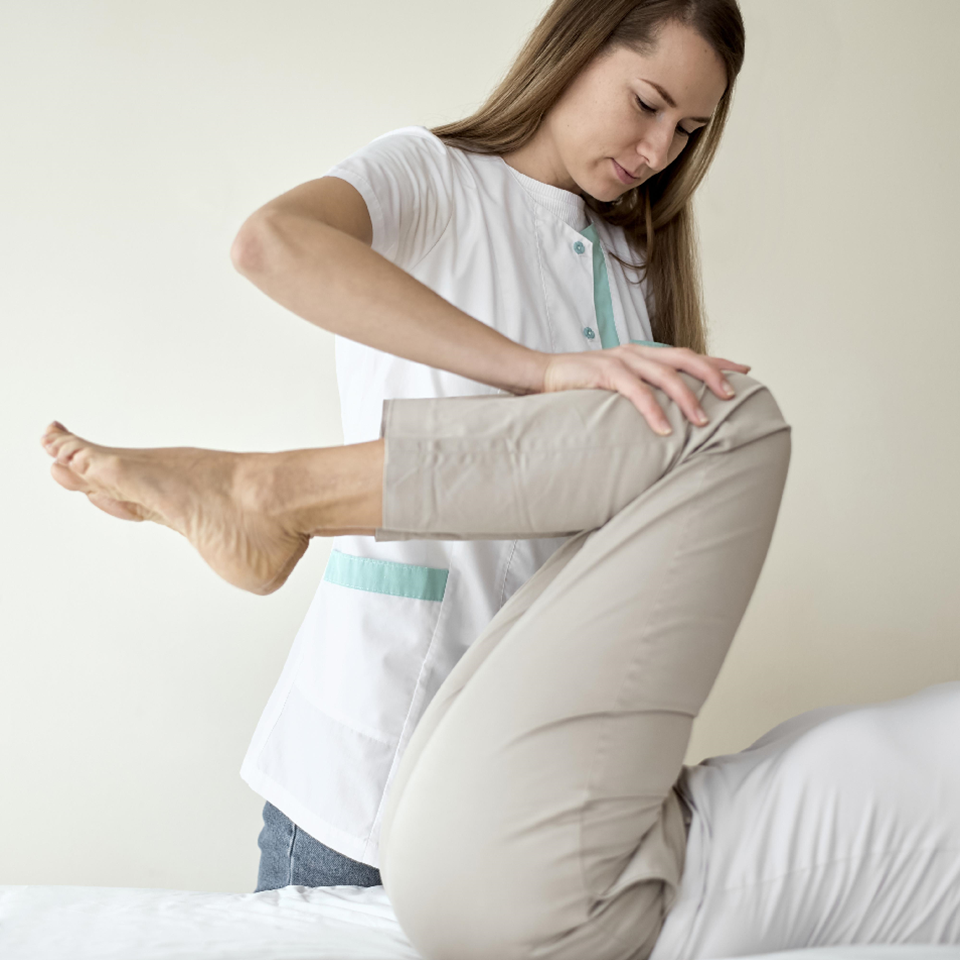
Acupuncture treats restless legs syndrome by placing fine needles at specific points to settle over-active nerve pathways, improve circulation to the legs, and address the underlying imbalance that Chinese medicine sees as the root of the problem. As blood flow to the lower limbs improves and the nervous system calms, the urge to move and the uncomfortable sensations tend to ease, which allows for deeper, less interrupted sleep.
For restless legs syndrome we often combine acupuncture with complementary therapies in the same session, guided by the assessment:
Over a regular course of treatment, the aim is to settle the pattern that drives the night-time symptoms rather than only easing a single bad night. Because RLS and poor sleep feed into each other, calming both together tends to give the most lasting relief.
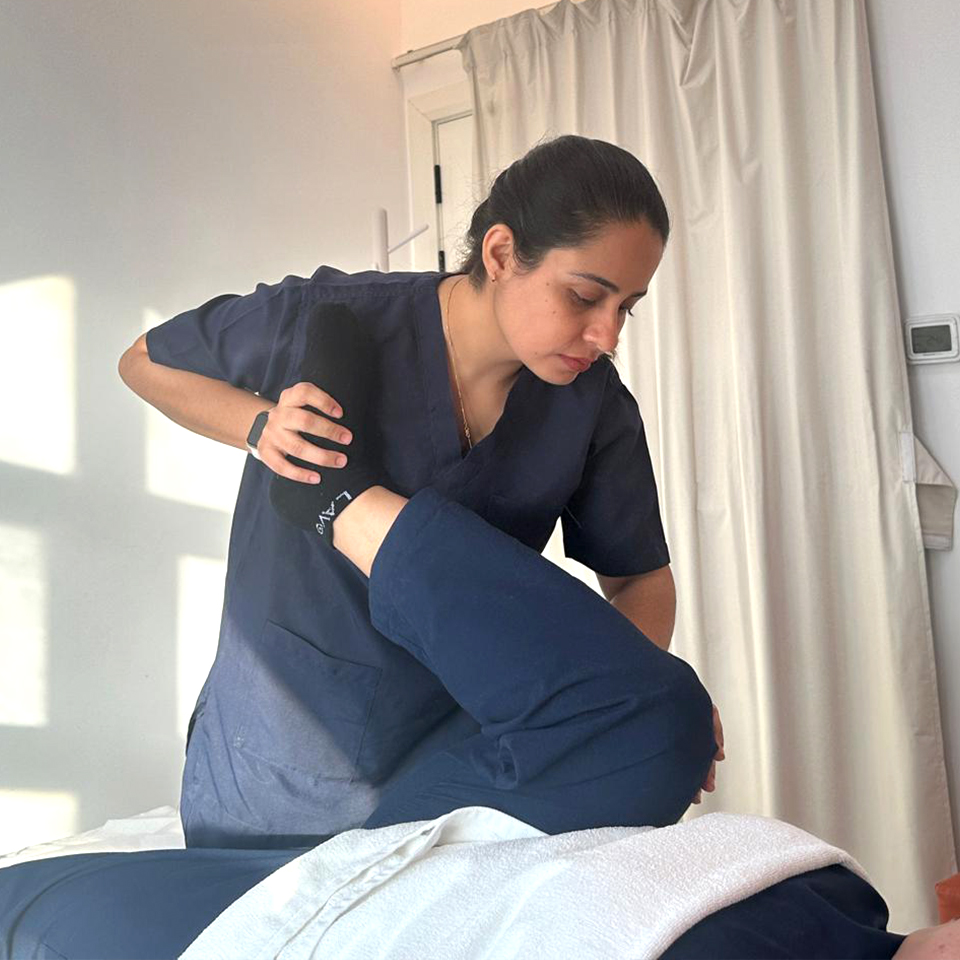
Restless legs syndrome shows up in several ways. At the clinic we regularly help with these.
The strong, uncontrollable urge to move the legs, especially in the evening.
Crawling, tingling, pulling or aching sensations deep in the calves and thighs.
Symptoms that flare at rest and ease only with movement.
Disrupted, broken sleep and the daytime fatigue that follows.
View treatment →Restless legs linked to pregnancy or low iron, as part of a wider plan.
Night-time leg cramps and twitching that disturb sleep.
RLS and poor sleep feed into each other — we also treat insomnia & sleep disorders and chronic fatigue.
Your first visit begins with an assessment. We ask about your symptoms, when they are worst, how they affect your sleep, any history of low iron or pregnancy, your medications, and your general health. In keeping with Chinese medicine we usually check your tongue and pulse too. This helps us understand the imbalance behind your restless legs and shape a treatment plan around it.
The needles are very fine, far thinner than the needles used for injections, and most people feel little more than a small pinch or a dull, warm sensation as a point activates. You then rest with the needles in place for around twenty to thirty minutes, which most patients find deeply relaxing. Afterwards we explain what we found and give you a realistic idea of how many sessions your condition is likely to need.
A clinical practice run by a DHA & MOH licensed doctor — not a spa offering a quick fix.
*Many patients notice a meaningful reduction in the severity of their night-time leg urges within the first three to four visits. Responses vary.
I visited for spinal treatment and I'm extremely satisfied. The massage and cupping really helped my back pain — the therapists are skilled, knowledgeable and gentle.
 Husnain Awan
Verified · Google
Husnain Awan
Verified · Google
A great experience — acupuncture, massage and cupping in one session. Relaxing and effective, can't wait for the next. Special thanks to Ms. Lei for being so friendly!
 Kyla Galita
Verified · Google
Kyla Galita
Verified · Google
Amazing physiotherapy experience with Ms. Archina! Professional, kind and attentive. Thanks to her care I saw great improvement in a short time. Highly recommend!
 Angeli Orpilla
Verified · Google
Angeli Orpilla
Verified · Google
You do not have to resign yourself to broken sleep and restless nights, and you do not need a referral to see us. Yuan Qi Acupuncture Center is in the Sheikh Majid Building on Sheikh Zayed Road in Business Bay, easy to reach from Downtown, Al Wasl and Jumeirah. Call or message on WhatsApp at +971 50 288 4479 and we will find a time that suits you. Your first consultation is included when you book a course of treatment.
Yes. Restless legs syndrome is one of the conditions we treat. Acupuncture works to settle over-active nerve pathways and improve circulation to the legs, which helps ease the restless urge and the uncomfortable sensations, allowing for better sleep.
In Chinese medicine, evening is the Yin phase, when blood and vitality move inward to rest and replenish. If circulation to the legs is poor, they do not get what they need during these hours, so the crawling and tingling build up just as you try to sleep.
RLS is often linked to low iron or pregnancy, both connected to blood insufficiency in Chinese medicine. Acupuncture supports the body's circulation and offers a gentle, drug-free option, which suits expectant mothers and those with low iron. Any supplements should be discussed with your doctor.
Responses vary, but many patients notice a meaningful reduction in the severity of their night-time leg urges within the first three to four visits. A fuller course over a few weeks helps settle the nervous system for longer-lasting improvement.
No. You do not need to stop any medical treatment. Acupuncture is a safe complement to standard therapy with no risk of medication interactions. If your symptoms ease over time, you may wish to discuss your prescription with your doctor.
Most people feel very little. The needles are far thinner than injection needles. You may feel a small pinch or a dull, warm ache as a point activates, and many find the session deeply relaxing.
It depends on how long you have had it and the underlying cause. Many patients start with a course of weekly sessions. We give you a realistic plan after the first assessment and adjust as you respond.
Yes, when performed by a licensed practitioner with sterile, single-use needles. Side effects are minor, usually slight bruising or short-lived tiredness. Our clinic follows DHA standards.
Yes, indirectly. RLS disrupts sleep, which causes daytime fatigue. By easing the night-time symptoms and supporting deeper sleep, treatment helps reduce the tiredness that follows.
In Chinese medicine, treatment is aimed at the underlying imbalance thought to drive the symptoms, not only the sensations themselves. By improving circulation and calming the nervous system, it addresses the pattern behind restless legs.
Stress and an over-active nervous system can worsen RLS, especially at night. Part of how acupuncture helps is by calming the nervous system, which is why many patients find their sleep improves alongside their leg symptoms.
Not necessarily. Many patients have an initial course to settle the symptoms, then occasional maintenance sessions if needed. We will discuss a realistic approach based on how your restless legs respond.
Yes. Night-time leg cramps and twitching that disturb sleep are often treated alongside restless legs, using acupuncture and warming therapies to improve circulation and ease the muscles.
Poor circulation to the lower limbs is part of how Chinese medicine understands RLS. Improving blood flow to the legs is one of the main aims of treatment, which is why circulation-focused therapies are often included.
We assess your symptoms, when they are worst, how they affect your sleep, any iron or pregnancy history, and your medications, and usually check your tongue and pulse. Then treatment begins, and afterwards we explain the likely number of sessions.
Plan for around 45 minutes to an hour for a first visit, including the assessment. The needles are usually left in place for about 20 to 30 minutes while you rest.
Wear loose, comfortable clothing that lets us reach the lower legs easily, eat something light beforehand, and try to arrive a little early so you are relaxed.
Often, yes. We may add moxibustion or targeted work on the calves, and treatment aimed at sleep and the nervous system, based on your assessment. We explain why before adding anything.
No referral is needed. You can book a restless legs assessment directly by phone, WhatsApp or through our website.
Call or message us on WhatsApp at +971 50 288 4479, or use the booking form on this page, and we will confirm a time that suits you.