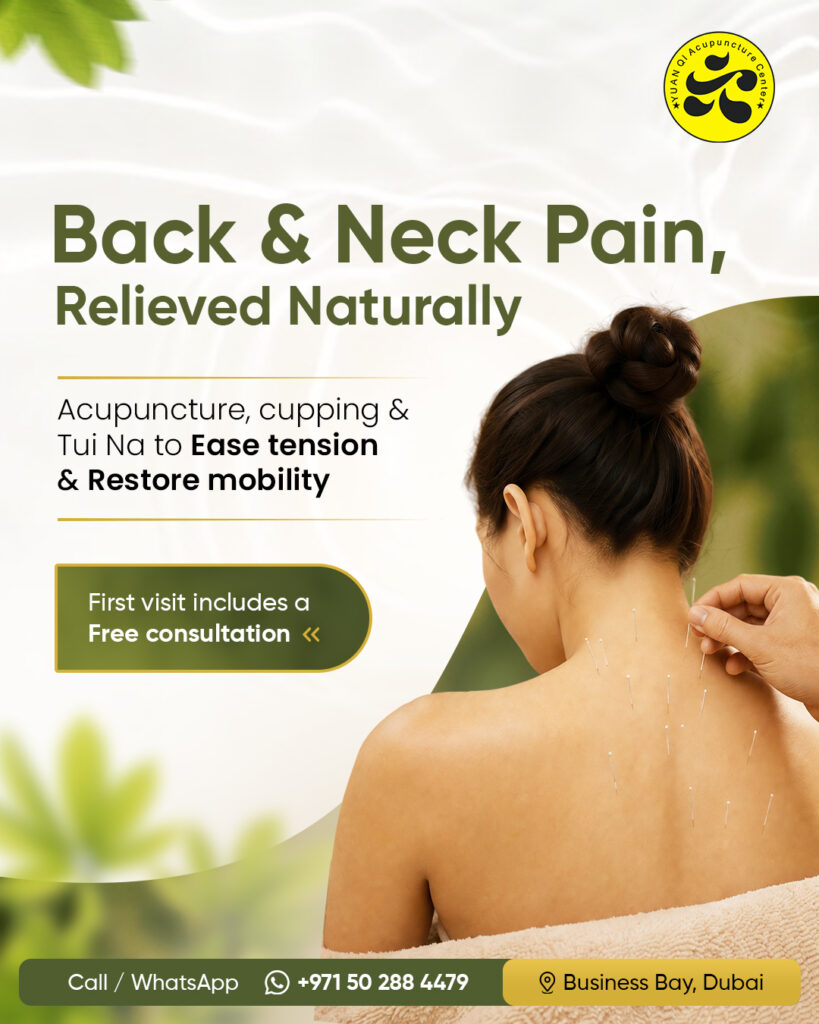
Back pain can start quietly.
Maybe you notice a little stiffness when you get out of bed. Maybe your lower back begins aching halfway through the workday. Or perhaps the discomfort has been around for months and keeps returning whenever you think it has finally settled.
For many people, the first response is simple: rest, painkillers, stretching, or waiting for it to pass.
Sometimes it does.
Sometimes it doesn’t.
When back pain becomes persistent, people often begin looking at other options, and acupuncture is usually one of them.
So, does acupuncture actually help back pain?
For some people, it may. Acupuncture has been studied as a complementary approach for lower-back pain, particularly persistent or chronic pain. But it is important to understand that back pain is not one single condition, and no treatment works the same way for everyone.
The first step is understanding what may be causing your pain.
Why Your Back Pain May Be Different From Someone Else’s
Two people can both complain of lower-back pain and still have completely different problems.
One person may spend eight or nine hours sitting at a desk each day. Another may have strained their back while exercising. Someone else may feel pain travelling from the lower back into the buttock or leg.
Back discomfort can be associated with things such as:
- muscle tension or strain
- long periods of sitting
- repetitive lifting
- reduced mobility
- previous injuries
- age-related changes
- poor movement habits
- irritation involving the spine or surrounding tissues
This is why simply saying, “I have back pain,” doesn’t tell the whole story.
Before treatment is considered, it helps to understand where the pain is, how long it has been there, what makes it worse, whether it travels anywhere else, and whether there has already been a diagnosis.
At Yuan Qi Acupuncture Center in Dubai, these are some of the things discussed during the initial consultation before an individual treatment plan is considered.
How Is Acupuncture Used for Back Pain?
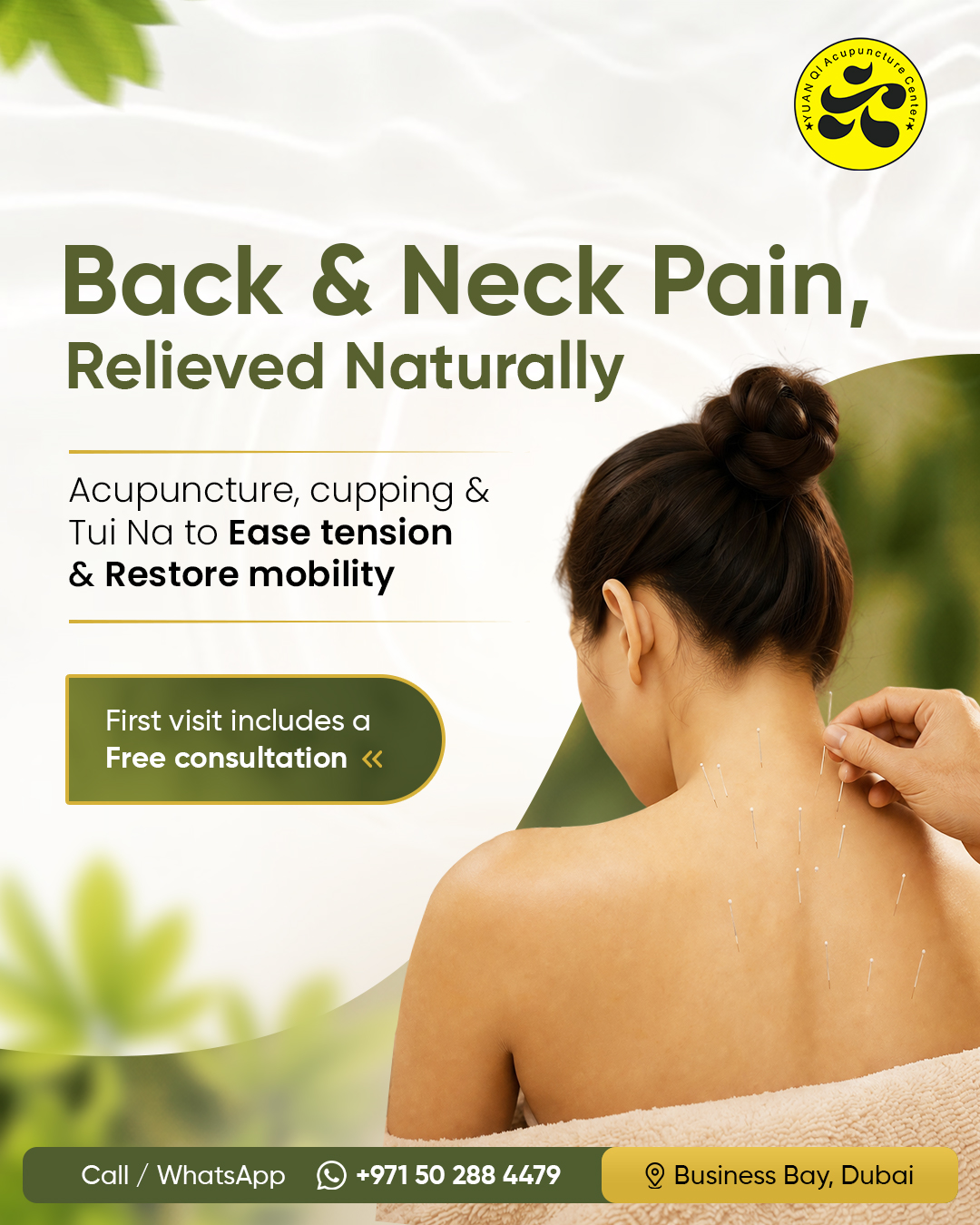
Acupuncture involves placing very fine needles into selected points on the body.
In Traditional Chinese Medicine, those points are selected according to the individual’s symptoms and the pattern identified by the practitioner.
From a modern research perspective, acupuncture has also been studied for its possible effects on pain signalling, the nervous system and the body’s natural pain-regulating mechanisms.
What acupuncture should not be presented as is a guaranteed cure.
Some people with lower-back pain report improvements in discomfort, movement or day-to-day function. Others notice only modest changes, and some may not find acupuncture helpful at all.
That difference matters.
A responsible practitioner should assess how you respond to treatment rather than promise that a certain number of needles or sessions will permanently fix your back.
What Does the Research Say?
Acupuncture has been researched quite extensively for lower-back pain.
Some reviews have found that it may provide modest benefits for people living with chronic low-back pain, particularly when compared with receiving no treatment.
However, medical guidelines do not all reach exactly the same conclusion.
Some healthcare organisations consider acupuncture a possible non-drug option for certain people with chronic low-back pain, while others do not recommend it routinely.
That is why we think it is more useful to look at acupuncture as a complementary treatment, rather than an alternative to proper medical assessment.
If you have already seen an orthopaedic doctor, neurologist or physiotherapist, acupuncture may sometimes be used alongside your existing care when appropriate.
What Kind of Back Problems Do People Seek Acupuncture For?
People come to acupuncture clinics with many different complaints.
Lower-back tension
This is particularly common among people who spend much of the day sitting.
And in Dubai, that can mean several hours at a desk followed by more time sitting in traffic.
By the end of the day, the lower back and hips may feel tight, stiff or uncomfortable.
Back pain that keeps returning
Some people feel better for a week or two and then the same discomfort comes back again.
Recurring pain is a good reason to look beyond temporary relief and understand what may actually be contributing to the problem.
Neck and upper-back tightness
Long hours on laptops and phones often affect more than the lower back.
The neck, shoulders and upper back can become tight as well, particularly when people spend most of the day in the same position.
Muscle-related back discomfort
Tight or overworked muscles around the back and hips can sometimes make movement uncomfortable or restricted.
Sciatica and radiating pain
Sciatica is different from ordinary muscular back pain.
The discomfort may travel from the lower back or buttock into the leg and can sometimes be accompanied by tingling, numbness or weakness.
If your pain travels down the leg, it is worth reading our dedicated information about sciatica and disc-related pain, because the assessment and treatment considerations may be different.
What Happens During Your First Acupuncture Appointment?
If you have never had acupuncture before, it is completely normal to wonder what actually happens.
The appointment should begin with a conversation.
Your practitioner may ask:
- Where exactly do you feel the pain?
- When did it begin?
- Does it stay in your back or travel elsewhere?
- Which movements make it worse?
- Have you had any previous injuries?
- Have you had scans or medical investigations?
- Are you currently taking medication?
- How active are you?
- How are you sleeping?
The answers help build a clearer picture of what is going on.
If acupuncture is considered appropriate, very fine needles are then placed at selected points.
Some may be around the back or surrounding muscles. Others may be placed elsewhere depending on the treatment approach being used.
Does Acupuncture Hurt?
Usually, people are more worried about the needles before their first session than after it.
Acupuncture needles are much finer than the needles used for injections or blood tests.
You may feel a brief sensation as the needle goes in. Some people describe warmth, tingling, heaviness or a dull feeling around the acupuncture point.
Others barely notice the needles and end up relaxing during the session.
If something feels uncomfortable, tell your practitioner.
You should never feel that you simply have to tolerate pain during treatment.
How Many Sessions Will I Need?
This is one of the most common questions we hear, but there is no single number that applies to everyone.
A person who developed mild back tension last week is very different from someone who has been dealing with chronic pain for several years.
The number of sessions may depend on:
- how long the problem has been present
- the cause of the pain
- how severe the symptoms are
- your overall health
- whether other conditions are involved
- how your body responds to treatment
Some people notice a change relatively early.
Others may need several sessions before they can properly judge whether acupuncture is helping.
The important thing is that your progress should be reviewed.
Be careful with anyone who guarantees that your back pain will disappear after exactly three, five or ten sessions.
Real healthcare is rarely that predictable.
Can Acupuncture and Physiotherapy Be Used Together?
Sometimes.
The two treatments have different roles.
Physiotherapy may focus more on movement, mobility, strength, rehabilitation and correcting physical patterns that contribute to pain.
Acupuncture may be used as another part of the overall treatment approach.
At Yuan Qi, both acupuncture and physiotherapy are available within the same clinic, which can be useful when a patient may benefit from more than one type of care.
That doesn’t mean everyone needs both.
The decision should depend on your individual condition.
What About Cupping, Tui Na or Other TCM Therapies?
Traditional Chinese Medicine includes more than acupuncture.
Depending on your assessment, a practitioner may sometimes recommend therapies such as:
Cupping therapy — cups are placed on the skin to create suction.
Tui Na — a traditional Chinese manual therapy using pressure and movement techniques.
Moxibustion — a traditional technique that uses controlled warmth around selected acupuncture points.
These treatments should have a reason for being included.
Adding more therapies does not automatically mean better results.
Your practitioner should be able to explain why a particular treatment is being recommended for you.
When Back Pain Should Be Checked by a Doctor First
Most everyday back pain is not an emergency.
But certain symptoms should not simply be treated with acupuncture without medical assessment.
Seek prompt medical attention if back pain is associated with:
- new or worsening weakness in the legs
- increasing numbness
- loss of sensation around the groin area
- changes in bladder or bowel control
- unexplained fever
- unexplained weight loss
- severe pain after a significant injury
- rapidly worsening pain
- a history of cancer together with new or unusual back pain
Sudden neurological symptoms need proper medical evaluation.
Acupuncture should never delay urgent medical care.
Is Acupuncture Safe?
When performed by a properly trained practitioner using sterile, single-use needles, acupuncture generally has a good safety record.
Minor effects can still happen.
Some people experience slight soreness, mild bruising, a tiny amount of bleeding, tiredness or temporary light-headedness after treatment.
Serious complications are uncommon, but acupuncture is not completely risk-free.
Always tell your practitioner if you:
- are pregnant
- take blood-thinning medication
- have a bleeding disorder
- have another significant medical condition
- are taking regular medication
At Yuan Qi Acupuncture Center, treatments are provided by licensed practitioners and carried out using appropriate clinical and hygiene standards.
Treatment Is Only Part of Looking After Your Back
Acupuncture can be one part of managing back pain.
But sometimes the reason the pain keeps returning is still waiting for you when you leave the clinic.
Your desk.
Your driving position.
Your gym technique.
Your lack of movement.
Your sleep.
Your workload.
Your training routine.
Depending on the reason for your pain, a longer-term approach may also involve strengthening, mobility work, physiotherapy, ergonomic changes, regular movement, better recovery or conventional medical treatment.
The aim shouldn’t simply be to make your back feel better for a few hours.
The bigger question is:
Why does it keep hurting, and what can realistically be changed?
How to Choose an Acupuncturist for Back Pain in Dubai
Don’t choose an acupuncture clinic simply because its website says it is “the best.”
Look at the person who will actually be treating you.
Check:
- Are they appropriately licensed?
- What professional training do they have?
- Do they regularly treat musculoskeletal complaints?
- Do they take a proper medical history?
- Do they use sterile, single-use needles?
- Do they explain the treatment plan?
- Are they willing to tell you when medical assessment is needed?
A good practitioner should also be comfortable saying:
“Acupuncture may not be the right first step for this.”
That is part of responsible healthcare.
Back Pain Acupuncture at Yuan Qi in Dubai
Yuan Qi Acupuncture Center is located in Business Bay, Dubai, and provides acupuncture and Traditional Chinese Medicine services for people with a range of musculoskeletal concerns.
Treatment begins with an individual consultation.
Rather than treating every case of back pain in exactly the same way, the practitioner considers the nature of the discomfort, your health history and any existing medical diagnosis before deciding what may be appropriate.
Depending on your condition, acupuncture may be used on its own or alongside other services available at the clinic, including physiotherapy and selected Traditional Chinese Medicine therapies.
If back or neck discomfort has been affecting your work, sleep, exercise or everyday activities, you can learn more about our Acupuncture for Back & Neck Pain in Dubai treatment or speak with our team about booking an assessment.
Frequently Asked Questions
Can acupuncture permanently cure back pain?
There is no responsible way to promise a permanent cure.
Back pain can have many causes, and people respond differently to treatment. Acupuncture may form one part of a broader pain-management or rehabilitation plan.
Is acupuncture better for chronic or recent back pain?
Acupuncture has been studied for both acute and chronic low-back pain, although evidence and clinical recommendations vary.
How long you have had the pain is only one part of the assessment.
Can I have acupuncture if I have a slipped disc?
Possibly, but the diagnosis alone doesn’t determine whether acupuncture is appropriate.
Your symptoms matter.
If you have significant weakness, worsening numbness, problems controlling your bladder or bowel, or other neurological symptoms, seek medical assessment promptly.
Can I exercise after acupuncture?
Most people can continue with normal daily activities.
Whether you should do strenuous exercise depends on your condition, the type of training you do and how you feel after treatment.
Can acupuncture help if my back pain comes from sitting all day?
People with desk-related back and neck discomfort do seek acupuncture.
However, treatment should usually be considered alongside changes such as improving your workstation, moving more frequently and addressing strength or mobility issues.
Can acupuncture and physiotherapy be done together?
Yes, in some cases.
Whether combining them makes sense depends on your diagnosis, symptoms and treatment goals.
For more information about our treatments or to book an appointment, visit our clinic or contact the Yuan Qi team directly.
Book your appointment today and speak with our licensed practitioners about the most appropriate treatment approach for your condition.