Yuan Qi — Header
Categories
Accupuncture in Dubai Blog patient guides therapies

Acupuncture Cost in Dubai: What You Will Actually Pay in 2026

Most clinics in Dubai will not tell you what acupuncture costs until you call them. We think that is backwards. If you are trying to work out whether a course of treatment fits your budget, you should be able to see the numbers first, and understand why one clinic charges more than another. This guide covers acupuncture cost in Dubai as it stands in 2026: what a session typically costs, what pushes the price up, whether packages are worth it, and how insurance claims usually work.


We are a Traditional Chinese Medicine clinic in Business Bay, so we have an obvious interest. To keep it fair, the market figures below come from prices other clinics publish themselves, and our own price list is further down where you can compare it.

Quick answer: a standard acupuncture session in Dubai generally costs around AED 300 to AED 350 at licensed clinics that publish their prices. A first visit costs more because it includes a full consultation. Facial acupuncture and longer combined sessions sit higher. Many insurance plans cover acupuncture on a reimbursement basis, which means you pay the clinic and claim it back.


How much does acupuncture cost in Dubai?


At licensed clinics that publish their prices, a standard follow-up acupuncture session costs roughly AED 300 to AED 350. That figure comes from published price lists we checked in October 2026, including our own. It covers a session of around 30 to 45 minutes with a practitioner licensed to practise Traditional Chinese Medicine.


A few things sit above that range:

  • A first visit that combines a full consultation with the first treatment. Published prices for this run noticeably higher than a follow-up session at some clinics.
  • Facial acupuncture, which takes longer and often comes with massage or Gua Sha. Published prices for this commonly start around AED 400 and go well above AED 600.
  • Combined sessions, where acupuncture is paired with cupping, moxibustion or Tui Na massage in one longer appointment.
  • Home visits, which are priced separately because the practitioner’s travel time is part of the cost.


You will also see much lower prices advertised on deal websites. Some of those are perfectly fine introductory offers. Others are for a different service altogether, so it is worth reading the small print, which we cover further down.


What affects the price of an acupuncture session?

Two sessions that look the same on a price list can be quite different appointments. These are the things that move the price.


Who is doing the needling

A doctor of Traditional Chinese Medicine with years of formal training and a Dubai Health Authority licence will usually charge more than a therapist with a short certificate working in a spa. You are paying for the assessment and the judgement behind where the needles go, not only the needles themselves.


Whether it is a first visit

A proper first appointment includes a full consultation: your history, the problem you came in with, sleep, stress and digestion, and in Chinese medicine a tongue and pulse check. That takes time, so first visits are longer and often cost more.


How long the session is

Most follow-ups involve the needles staying in for around 20 to 30 minutes. Longer appointments that treat more than one area, or combine several therapies, cost more.


What else is included

Cupping, moxibustion, Gua Sha, Tui Na massage and electro-acupuncture are often added to a session. Some clinics include them in the acupuncture price, and others charge for each one. Always ask what the quoted price covers.


Herbal medicine

If Chinese herbal medicine is prescribed, it is usually charged separately, and the cost depends on the formula and how long you take it for. It should only be prescribed after a proper assessment.


Where the clinic is

Rent in central Dubai is not cheap, and it shows up in prices. That said, the gap between a central clinic and one further out is usually smaller than the gap between a licensed medical practitioner and an unlicensed one.


Yuan Qi acupuncture prices

These are our current prices for single sessions. If you are not sure which treatment you need, message us first and we will point you in the right direction before you book anything.


HTML TABLE (featured snippet target)

TreatmentPrice per sessionNotes
AcupunctureAED 300With Dr. Jun Huang, DHA and MOH licensed doctor of TCM
Tui Na Chinese medical massageAED 280Can be combined with acupuncture
MoxibustionAED 250Often added for cold, stubborn pain
PhysiotherapyAED 300With Dr. SuryaLakshmi, including dry needling where suitable
Lymphatic massageAED 300
Facial acupunctureAED 400
Facial acupuncture and Gua Sha, first sessionAED 500Longer first appointment
Chinese herbal medicineVariesDepends on the prescription
Home visitsOn requestAsk when booking


Your first consultation is included when you book a course of treatment, so the assessment does not come as an extra charge on top.


How many sessions will I need, and what will a course cost?

This is the more useful question, because hardly anyone has a single session and stops. The number of sessions depends on what you are treating and how long you have had it. A recent, straightforward problem may settle in a handful of sessions. Something that has built up over months or years usually needs a longer course, often weekly to begin with and then spaced out as things improve.


As a rough way to budget, multiply the session price by the number of sessions you are realistically likely to need. At AED 300 a session, a course of six weekly sessions comes to AED 1,800. That is an illustration, not a prescription. After your first assessment, you should be given a realistic plan with an estimated number of sessions, so you can see the total before you commit.


Be wary of anyone who promises a fixed result for a fixed number of sessions. Bodies do not work to a price list, and a good practitioner will review your progress and tell you honestly if acupuncture is not helping.


Are acupuncture packages worth it?

Packages can save money if you are confident you will complete the course. Clinics in Dubai commonly offer a lower price per session when you pay for several upfront. Before you buy one, check four things:


  • How long the package is valid for, and whether unused sessions expire
  • Whether you can get a refund, or transfer sessions, if acupuncture turns out not to suit you
  • Whether the package can be used for other treatments, such as cupping or physiotherapy
  • Whether insurance will reimburse a package payment, since some insurers want a receipt per session


If you are new to acupuncture, it is usually sensible to have the first assessment and one or two sessions before committing to a block. You will know far more about how your body responds by then.


Is acupuncture covered by insurance in the UAE?

Often, but it depends entirely on your plan. Some policies cover acupuncture in full, some cover a set number of sessions or a percentage of the cost, and some exclude it altogether. It is usually listed under complementary or alternative medicine benefits, so look for that section in your policy documents.


Many clinics, including ours, do not offer direct billing for acupuncture. That means you pay at the clinic and then claim the money back from your insurer. To make that easier, we provide official receipts for every payment, treatment summaries, and medical reports where your insurer asks for one.


Questions to ask your insurer before you book

  • Is acupuncture covered under my plan, and under which benefit?
  • Is there a limit on the number of sessions, or a yearly cap?
  • What percentage is reimbursed, and is there a co-payment?
  • Do I need a referral or prior approval from a doctor?
  • Which documents do you need with the claim, and how long do I have to submit it?


We work with patients covered by a wide range of insurers. You can see the list, and how our claim documents work, on our insurance page.


What do cupping, moxibustion and other TCM therapies cost?

Most Traditional Chinese Medicine therapies are priced in a similar band to acupuncture, and they are often combined with it in the same visit. At Yuan Qi, moxibustion and Tui Na massage are slightly below the acupuncture price, as you can see in the table above. Cupping, including wet cupping or Hijama, is frequently added to an acupuncture session rather than booked on its own, so ask how it will be charged when you book.


If more than one therapy is recommended, you should be told why before it is added and what it will cost. That is how it works at our clinic, and it is a reasonable thing to expect anywhere.


Cheap acupuncture deals: what to check first

Price matters, but with needles it should not be the only thing that matters. Before booking a heavily discounted session, check:


  • Is the practitioner licensed by the Dubai Health Authority to practise acupuncture or Traditional Chinese Medicine? You can ask for their name and check.
  • Is it acupuncture at all, or acupressure, reflexology or massage described loosely?
  • Are the needles sterile and single use, opened in front of you?
  • Is there a proper assessment, or does everyone get the same points?
  • Is the setting a clinic or a spa? Both can be pleasant, but they are not the same thing.


A cheap session from someone who is not properly trained is not a saving. A fairly priced one that is clearly explained, safely delivered and part of a sensible plan usually is.

How to keep the cost of acupuncture down


  • Check your insurance first. Even partial cover makes a real difference over a course.
  • Ask for a treatment plan with an estimated number of sessions after your first visit.
  • Keep appointments regular at the start. Gaps early on tend to mean more sessions overall.
  • Do the home exercises or lifestyle changes you are given. They make each session count for more.
  • Only buy a package once you know the treatment suits you.
  • Ask whether therapies like cupping are included or charged on top, so there are no surprises.


Acupuncture cost in Dubai: the short version
  • Acupuncture cost in Dubai is usually around AED 300 to AED 350 per standard session at licensed clinics that publish prices.
  • First visits, facial acupuncture, combined therapies and home visits cost more.
  • A full course matters more than a single session price, so ask for a plan with an estimated number of sessions.
  • Packages can save money, but read the expiry and refund terms first.
  • Many UAE insurance plans cover acupuncture by reimbursement, so check your policy and keep every receipt.
  • A licensed practitioner and sterile, single-use needles are worth paying for.

Want an exact quote for what you are dealing with?

Call or WhatsApp us on +971 50 288 4479, or book online, and we will tell you which treatment fits and what it will cost before you come in.


FAQs

  1. How much does acupuncture cost in Dubai?

A standard acupuncture session in Dubai generally costs around AED 300 to AED 350 at licensed clinics that publish their prices. First visits with a full consultation, facial acupuncture and longer combined sessions cost more.

  1. What is the acupuncture cost in Dubai at Yuan Qi?

A single acupuncture session at Yuan Qi is AED 300 with Dr. Jun Huang, a DHA and MOH licensed doctor of Traditional Chinese Medicine. Your first consultation is included when you book a course of treatment.

  1. Why is the first acupuncture session more expensive?

Because it includes a full consultation before treatment: your history, the main problem, sleep, stress and digestion, and in Chinese medicine a tongue and pulse check. That takes longer than a follow-up session.

  1. How long is an acupuncture session?

A follow-up session usually takes around 30 to 45 minutes, with the needles in place for about 20 to 30 minutes. Plan for up to an hour for a first visit.

  1. How many acupuncture sessions will I need?

It depends on the problem and how long you have had it. Recent issues may settle in a few sessions, while long-standing ones usually need a longer course. You should get a realistic estimate after your first assessment.

  1. How much does a full course of acupuncture cost?

Multiply the session price by the number of sessions in your plan. For example, six sessions at AED 300 come to AED 1,800. Your practitioner should give you an estimate after the first visit.

  1. Is acupuncture covered by insurance in the UAE?

Often, but it depends on your plan. Some policies cover it fully, some partly or for a set number of sessions, and some exclude it. It usually appears under complementary or alternative medicine benefits.

  1. Does Yuan Qi offer direct billing with insurance?

Not at the moment. You pay at the clinic and claim the cost back from your insurer. We provide official receipts, treatment summaries and medical reports where your insurer needs them.

  1. What documents do I need to claim acupuncture on insurance?

Usually an official receipt for each payment and a treatment summary. Some insurers also ask for a medical report or a doctor’s referral, so check with yours before you book.

  1. Are acupuncture packages cheaper?

Packages often lower the price per session if you pay for several upfront. Check how long they are valid for, whether unused sessions can be refunded and whether your insurer will reimburse a package payment.

  1. Should I buy a package on my first visit?

It is usually sensible to have your assessment and one or two sessions first. That gives you a better idea of how your body responds before committing to a block of sessions.

  1. How much does facial acupuncture cost in Dubai?

Facial acupuncture costs more than a standard session because it takes longer and often includes massage or Gua Sha. Published prices commonly start around AED 400 and can go well above AED 600.

  1. How much does cupping cost in Dubai?

Cupping is often added to an acupuncture session rather than booked alone, so the cost depends on how the clinic charges for it. Ask whether it is included in the session price or charged separately.

  1. Is Chinese herbal medicine included in the price?

Usually not. Herbal medicine is normally charged separately, and the cost depends on the formula and how long you take it. It should only be prescribed after a proper assessment.

  1. Do home acupuncture visits cost more?

Yes, home visits are priced separately because the practitioner’s travel time is part of the appointment. Yuan Qi offers home visits; ask for the price when you book.

  1. Why are some acupuncture deals so cheap?

Some are genuine introductory offers. Others may be for acupressure or massage rather than acupuncture, or may not involve a licensed practitioner. Check who is treating you and what is included.

  1. How do I check if an acupuncturist is licensed in Dubai?

Ask for the practitioner’s full name and licence details. Acupuncture in Dubai should be carried out by someone licensed by the Dubai Health Authority to practise Traditional Chinese Medicine.

  1. Is a more expensive acupuncture session better?

Not automatically. What matters most is a licensed practitioner, a proper assessment, sterile single-use needles and a clear plan. Price differences often reflect session length and what is included.

  1. Can I pay for acupuncture by card?

Most clinics in Dubai accept card payments. Ask the clinic when you book, and keep the receipt if you plan to claim on insurance.

  1. How do I get an exact price for my treatment?

Call or WhatsApp Yuan Qi on +971 50 288 4479 and tell us what you are dealing with. We will tell you which treatment fits and what it will cost before you come in.
Categories
therapies

Dry Needling vs Acupuncture: What Is the Difference and Which Do You Need?

If you have been told you need dry needling and wondered whether it is just acupuncture under another name, you are not alone. The question of dry needling vs acupuncture comes up at our clinic in Business Bay almost every week, usually from people who have seen both on a price list and cannot tell them apart. That is fair. From the outside they look identical: a fine needle, a treatment table, and a practitioner who knows where to put it.


We are in a slightly unusual position to answer it, because we offer both. Acupuncture at Yuan Qi is led by Dr. Jun Huang, a doctor of Traditional Chinese Medicine licensed by the Dubai Health Authority and the Ministry of Health. Dry needling is carried out by our physiotherapist, Dr. SuryaLakshmi, who is certified in clinical dry needling. So this is not one side explaining the other. It is two practitioners who work down the corridor from each other and regularly share patients.


What is the difference between dry needling and acupuncture?


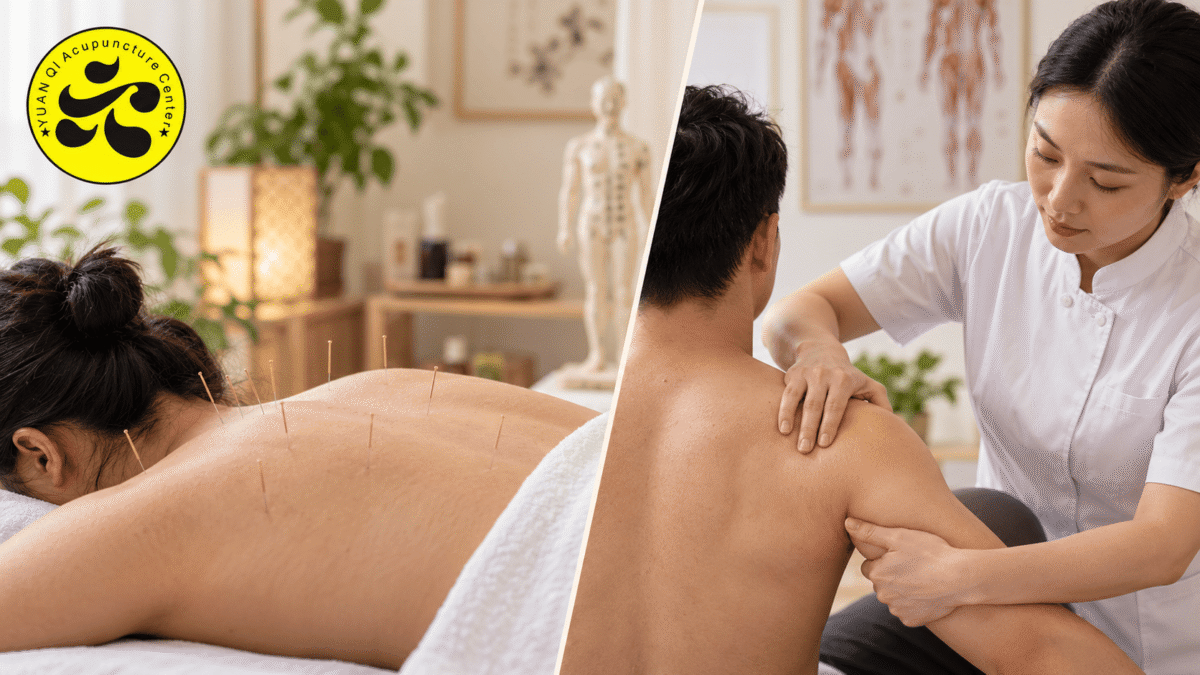
The difference between dry needling and acupuncture is the reasoning behind where the needle goes, not the needle itself. Dry needling follows a Western musculoskeletal model: find the tight, tender band in the muscle that is driving the pain and needle it directly. Acupuncture follows a Traditional Chinese Medicine model: assess the whole pattern behind the symptoms, then choose points along the body’s channels, some of which may be nowhere near the sore spot.


Here is how the two compare side by side.

Dry needlingAcupuncture
Where it comes fromWestern medicine and physiotherapy, built on trigger point researchTraditional Chinese Medicine, practised for centuries
Main aimRelease a specific tight or irritable muscleRestore balance in the body as a whole and ease symptoms
How points are chosenBy feeling for trigger points in the muscleBy a TCM assessment that includes your history, tongue and pulse
How long the needles stay inSeconds to a few minutes, often moved in and outUsually around 20 to 30 minutes while you rest
What it tends to feel likeDeeper, more muscular, sometimes a brief twitchSubtle, often a dull ache, warmth or heaviness
Typically used forMuscle pain, stiffness, sports and desk-related strainPain, plus stress, sleep, headaches, digestion and women’s health
Who does it at Yuan QiDr. SuryaLakshmi, physiotherapistDr. Jun Huang, doctor of TCM
Often paired withExercise, manual therapy and rehabCupping, moxibustion, Tui Na and herbal medicine


 What is dry needling?


Dry needling is a physiotherapy technique in which a fine, solid needle is inserted into a trigger point, the small, tight knot you can sometimes feel when someone presses into a sore shoulder or the side of your neck. The word ‘dry’ simply means nothing is injected. The needle itself is the treatment.

It grew out of research into muscle trigger points in the second half of the twentieth century, when doctors noticed that needling a knot, even without injecting anything into it, could ease the pain it was causing. Physiotherapists have since refined it into a precise, targeted technique.


In a session, the physiotherapist feels along the muscle to find the band that reproduces your pain, then inserts the needle into it. The needle may be moved gently in and out for a short time. Often the muscle gives a quick involuntary twitch, called a local twitch response, which is usually a sign the right spot has been found. Then the needle comes out, and the area is often followed by stretching or exercise.


Dry needling is almost never a standalone treatment. It is one tool inside a wider physiotherapy plan that also looks at posture, movement and strength, because releasing a knot does not help much if the habit that created it carries on.


What is acupuncture?

Acupuncture is one of the core therapies of Traditional Chinese Medicine. Very fine, sterile needles are placed at specific points on the body to encourage a response from the nervous system and improve circulation. In Chinese medicine terms, the aim is to restore the smooth flow of Qi and blood through channels known as meridians. In plain clinical language, the needles prompt the body to calm an overactive stress response and release its own pain-relieving chemicals.


The biggest practical difference is the assessment. Before any needle goes in, a TCM practitioner asks about far more than the sore spot: your sleep, digestion, stress, energy and, where relevant, your menstrual cycle. They usually look at your tongue and feel your pulse. Two people with the same lower back pain can end up with quite different treatments, because the pattern behind the pain is different.


Once the needles are in place, you rest with them for around twenty to thirty minutes. Many people find it deeply relaxing and some fall asleep on the table. Acupuncture can also be combined with electrical stimulation, known as electro-acupuncture, or with cupping, moxibustion and Tui Na massage in the same visit.

Is dry needling the same as acupuncture?


No, although the two overlap more than either side sometimes likes to admit. They use the same type of needle, and many classic acupuncture points sit very close to common trigger points. Some acupuncturists argue that dry needling is simply a narrow form of acupuncture. Many physiotherapists argue it is a separate technique with its own logic and training.


For you as a patient, the more useful way to think about it is this: dry needling is a technique, while acupuncture is part of a whole system of medicine. Dry needling asks ‘which muscle is causing this?’ Acupuncture asks ‘why is this happening in this person?’ Both are valid questions. Which one matters more depends on what you are dealing with.

Does dry needling hurt more than acupuncture?


Usually, dry needling feels stronger than acupuncture. Because the needle goes into a tight, sensitive part of the muscle, and because it may be moved to provoke a twitch, people often describe a deep cramp-like ache for a second or two. It passes quickly, but it is not subtle.


Acupuncture tends to feel gentler. Most people notice a small pinch as the needle goes in, then a dull ache, warmth or heaviness around the point, which Chinese medicine regards as a good sign that the point is active. After that, most of the session is spent lying still.


Afterwards, dry needling commonly leaves the treated muscle feeling sore or bruised for a day or two, a bit like the morning after a hard workout. Acupuncture more often leaves people feeling relaxed or a little tired. Both are normal and both settle on their own.


Which is better for back pain, neck pain and sports injuries?


It depends on where the pain is coming from and how long you have had it. Neither is better across the board, and anyone who tells you otherwise is selling one of them.


Dry needling often suits pain that is clearly muscular and local:

  • A tight upper back and neck from long hours at a laptop
  • A knot under the shoulder blade that refers pain up into the head
  • Calf, hamstring or glute tightness from running or gym work
  • A muscle that has guarded and stiffened after an injury and needs releasing before rehab can progress


Acupuncture often suits pain that is longer-standing or more tangled up with the rest of your life:

  • Back or neck pain that keeps returning even after physiotherapy
  • Pain that is worse when you are stressed or sleeping badly
  • Sciatica-type pain or pain that spreads over a wide area
  • Joint pain, headaches or jaw pain alongside muscle tension


In practice, a lot of the back and neck pain we see in Dubai has both elements: a genuinely tight muscle and a nervous system that has been running on stress for months. That is where combining the two tends to make the most sense.

When is acupuncture the better fit?


Dry needling is designed for muscles. Acupuncture has a much wider scope, so if your main concern is not muscular, acupuncture is the relevant option. People come to us for acupuncture as complementary support for stress and anxiety, poor sleep, migraines and tension headaches, digestive discomfort, fatigue, and women’s health concerns such as painful or irregular periods.

It is always used alongside conventional medical care, not instead of it. If something needs investigating, such as a new or unexplained symptom, the right first step is your doctor.


Can you have dry needling and acupuncture together?


Yes, and for some people that is the most practical approach. A common pattern at our clinic is a patient who arrives with stubborn neck and shoulder pain from desk work. Dr. SuryaLakshmi assesses the muscles, uses dry needling on the trigger points that are clearly driving the pain, and builds a rehab plan. Dr. Jun Huang then looks at why the tension keeps coming back, which is often stress and broken sleep, and treats that side of it with acupuncture.


The two are not always done in the same session. Depending on how sore the muscle is after dry needling, they may be spaced a few days apart. The point is that the plan is joined up, with both practitioners aware of what the other is doing.

Are there side effects or risks?


Both treatments are considered safe when carried out by a trained, licensed practitioner using sterile, single-use needles. The common side effects are minor and short-lived:


  • Soreness or a bruised feeling at the needle site, more likely after dry needling
  • Small bruises or a tiny spot of bleeding
  • Feeling tired, light-headed or emotional after a session
  • Occasionally, a brief flare in symptoms before they settle


Serious problems are rare. The most important one to know about is that needling over the chest wall or upper back carries a small risk of puncturing the lung if it is done carelessly. This is exactly why training, anatomy knowledge and licensing matter more than price. Ask who will be treating you and what qualifies them to do it.

Tell your practitioner first if any of these apply

  • You are pregnant or might be
  • You take blood thinners or have a bleeding disorder
  • You have a pacemaker or other implanted device, especially before any electrical stimulation
  • You have diabetes, a weakened immune system or skin problems near the treatment area
  • You have fainted during injections or blood tests before
  • You have a metal allergy

None of these automatically rules you out. They simply change how the treatment is planned.

Who performs each treatment in Dubai?

This is worth checking wherever you go. Acupuncture in Dubai should be carried out by a practitioner licensed by the Dubai Health Authority to practise Traditional Chinese Medicine. Dry needling is usually performed by a physiotherapist who has completed additional, certified training in the technique.

At Yuan Qi, acupuncture is led by Dr. Jun Huang, who holds a bachelor’s and master’s degree in acupuncture from Guangxi Traditional Chinese Medical University and has practised in the UAE since 2013. Dry needling is carried out by Dr. SuryaLakshmi, our physiotherapist, who is certified in clinical dry needling and rehabilitation. You will always know which of them is treating you and why.

Dry needling vs acupuncture: how do I choose?

If you are still unsure, these questions usually point the right way:

  • Is the pain in one muscle you can put your finger on? Dry needling is a reasonable place to start.
  • Has the pain been coming and going for months, or does it get worse with stress? Acupuncture, or both, is worth considering.
  • Is your main concern sleep, stress, headaches, digestion or your cycle? Acupuncture is the relevant option.
  • Are you recovering from an injury and need to rebuild strength? Physiotherapy with dry needling as part of it.
  • Do you dislike strong sensations? Acupuncture is generally the gentler experience.

You do not have to work this out alone. Tell us what is going on when you get in touch, and we will tell you honestly which practitioner you should see first.

What happens when you book at Yuan Qi?

Your first visit starts with an assessment, not a needle. If you are seeing Dr. SuryaLakshmi, that means a physiotherapy assessment of how you move, where the tightness is and what is loading it. If you are seeing Dr. Jun Huang, it means a TCM consultation covering your history, sleep, stress and digestion, with a tongue and pulse check. Either way, you will hear what we think is going on and what we suggest before treatment begins, along with a realistic idea of how many sessions it is likely to take.

The clinic is in the Sheikh Majid Building on Sheikh Zayed Road in Business Bay, easy to reach from Downtown, Al Wasl, Jumeirah and DIFC. No referral is needed, and we can provide receipts and treatment summaries if your insurance covers acupuncture or physiotherapy.

The short version
  • Dry needling vs acupuncture comes down to reasoning, not needles: the needles are the same.
  • Dry needling targets trigger points in a specific muscle and is part of physiotherapy.
  • Acupuncture is part of Traditional Chinese Medicine and looks at the whole pattern behind your symptoms.
  • Dry needling usually feels stronger; acupuncture is usually gentler and more relaxing.
  • Many people do best with a combination, planned by practitioners who talk to each other.
  • Both are complementary care and work alongside your doctor, not instead of them.
FAQs 
  1. What is the main difference between dry needling and acupuncture?

The reasoning behind where the needle goes. Dry needling targets tight trigger points in a specific muscle, based on Western physiotherapy. Acupuncture uses points chosen through a Traditional Chinese Medicine assessment and looks at the whole pattern behind your symptoms.

  1. Dry needling vs acupuncture: which is better?

Neither is better in every case. Dry needling often suits clearly muscular, local pain. Acupuncture often suits longer-standing pain or pain mixed with stress and poor sleep, and it is also used for non-muscular concerns. Many people benefit from both.

  1. Is dry needling the same as acupuncture?

No. They use the same type of thin, solid needle, but dry needling is a single physiotherapy technique aimed at muscles, while acupuncture is part of the wider system of Traditional Chinese Medicine.

  1. Do dry needling and acupuncture use the same needles?

Yes, both use fine, solid, sterile single-use needles. Nothing is injected in either treatment. The difference is in where the needles go, how long they stay in and how they are used.

  1. Does dry needling hurt?

It usually feels stronger than acupuncture. Many people feel a brief, deep cramp or a small muscle twitch when the trigger point is reached. It passes in seconds, though the muscle may feel sore for a day or two afterwards.

  1. Does acupuncture hurt?

Most people feel very little. There may be a small pinch as the needle goes in and then a dull ache, warmth or heaviness around the point. Many patients find the session relaxing enough to fall asleep.

  1. How long does each treatment take?

Dry needling is usually part of a physiotherapy session, with the needles in for seconds to a few minutes. In acupuncture the needles typically stay in for around 20 to 30 minutes. A first visit for either takes longer because it includes an assessment.

  1. Which is better for back pain?

It depends on the cause. A tight, local muscle may respond well to dry needling as part of physiotherapy. Back pain that keeps returning, spreads widely or worsens with stress often suits acupuncture or a combined plan.

  1. Which is better for neck and shoulder pain from desk work?

Desk-related neck and shoulder pain is often a mix of tight muscles and ongoing stress. Dry needling can release the trigger points, while acupuncture can help with the tension and poor sleep that keep bringing it back.

  1. Can dry needling help with stress, sleep or headaches?

Dry needling is designed for muscles, so it is not used for stress or sleep. It can help headaches that are driven by tight neck and shoulder muscles. For stress, sleep and most other headaches, acupuncture is the relevant option.

  1. Can I have dry needling and acupuncture together?

Yes. At Yuan Qi our physiotherapist and TCM doctor often share patients. Depending on how sore the muscle is, the treatments may be done on the same day or spaced a few days apart.

  1. What are the side effects of dry needling?

The most common is muscle soreness for a day or two, along with possible bruising, tiredness or light-headedness. Serious problems are rare when it is done by a trained, certified practitioner.

  1. What are the side effects of acupuncture?

Side effects are usually minor: slight bruising, a small spot of bleeding, or feeling tired or relaxed afterwards. Serious problems are rare when a licensed practitioner uses sterile, single-use needles.

  1. Is dry needling safe during pregnancy?

Always tell your practitioner if you are pregnant or might be. Some points and areas are avoided in pregnancy, and the treatment plan will be adapted or changed accordingly.

  1. Can I have needling if I take blood thinners?

Often yes, but you must tell your practitioner first. Blood thinners increase the chance of bruising, so the approach may be adjusted.

  1. Who can perform dry needling and acupuncture in Dubai?

Acupuncture should be carried out by a practitioner licensed by the Dubai Health Authority to practise Traditional Chinese Medicine. Dry needling is usually performed by a physiotherapist with additional certified training. Always ask who is treating you.

  1. How many sessions will I need?

It depends on the problem and how long you have had it. Recent muscular pain may settle in a few sessions. Long-standing or recurring problems usually need a longer course. You will get a realistic plan after your first assessment.

  1. What is electro-acupuncture, and is it the same as dry needling with stimulation?

Electro-acupuncture passes a gentle electrical current between acupuncture needles placed at TCM points. Some physiotherapists also add electrical stimulation to dry needling. The equipment is similar, but the point selection and reasoning follow the two different approaches.

  1. Is dry needling or acupuncture covered by insurance in the UAE?

It depends entirely on your policy. Some plans cover physiotherapy, some cover acupuncture, and some cover neither. Check with your insurer first; we can provide receipts and treatment summaries for claims.

  1. Do I need a referral to book at Yuan Qi?

No. You can book directly by phone or WhatsApp on +971 50 288 4479 or through our website, and your first visit starts with an assessment.


Book Appointment :

Yuan Qi Acupuncture center – https://yuanqiacupuncture.com/

Call or WhatsApp us on +971 50 288 4479, or book an assessment online, and we will point you to the right practitioner.


Categories
therapies

Bridging Ancient and Modern: Chinese Medicine and Physiotherapy in Dubai

Dubai embraces holistic healthcare, with Chinese traditional medicine in Dubai focusing on balance via acupuncture, cupping, and herbal formulas. Patients seeking natural, drug-free options often turn to traditional Chinese medicine in Dubai to complement conventional care.

Licensed clinics offer traditional Chinese medicine in Dubai with certified practitioners. Treatments include acupuncture for back pain, moxibustion for circulation, and herbal blends for digestion. Numerous reports moved forward stretch administration, rest quality, and imperativeness.

Modern rehabilitation remains essential—a physiotherapy clinic in Dubai provides manual therapy, exercises, electrotherapy, and sports rehabilitation. Therapists assess posture, gait, and biomechanics to design programs for post-surgery recovery, arthritis management, and sports injuries.

The synergy between Chinese traditional medicine in Dubai and physiotherapy is powerful. For example, acupuncture can reduce inflammation and ease pain in a knee injury, while a physiotherapy clinic in Dubai guides range-of-motion exercises and strength routines to rebuild stability and prevent re-injury. Combining these modalities accelerates healing by addressing energetic and mechanical needs.

Stress-related tension benefits from integrative care: acupuncture and Tui Na massage calm the nervous system and release fascia, while physiotherapists use myofascial release, posture correction, and biofeedback for long-term relief.

Combining Chinese traditional medicine in Dubai with modern physiotherapy services promotes comprehensive healing for chronic pain, injury recovery, or prevention, helping patients achieve vitality.

Categories
therapies

Experience Natural Healing: Cupping, Moxibustion & Hijama Therapy in Dubai 

Looking for authentic and effective traditional therapies in Dubai? Discover the powerful benefits of Cupping Therapy, Moxibustion, and Hijama Therapy at Yuan Qi Acupuncture, Dubai’s trusted destination for holistic healing.

At Yuan Qi Acupuncture, ancient wisdom meets modern expertise. Their team of licensed Traditional Chinese Medicine (TCM) practitioners provides personalized care rooted in centuries-old techniques. Whether you’re seeking pain relief, detoxification, or an energy boost, their therapies are designed to rebalance your body and restore vitality.

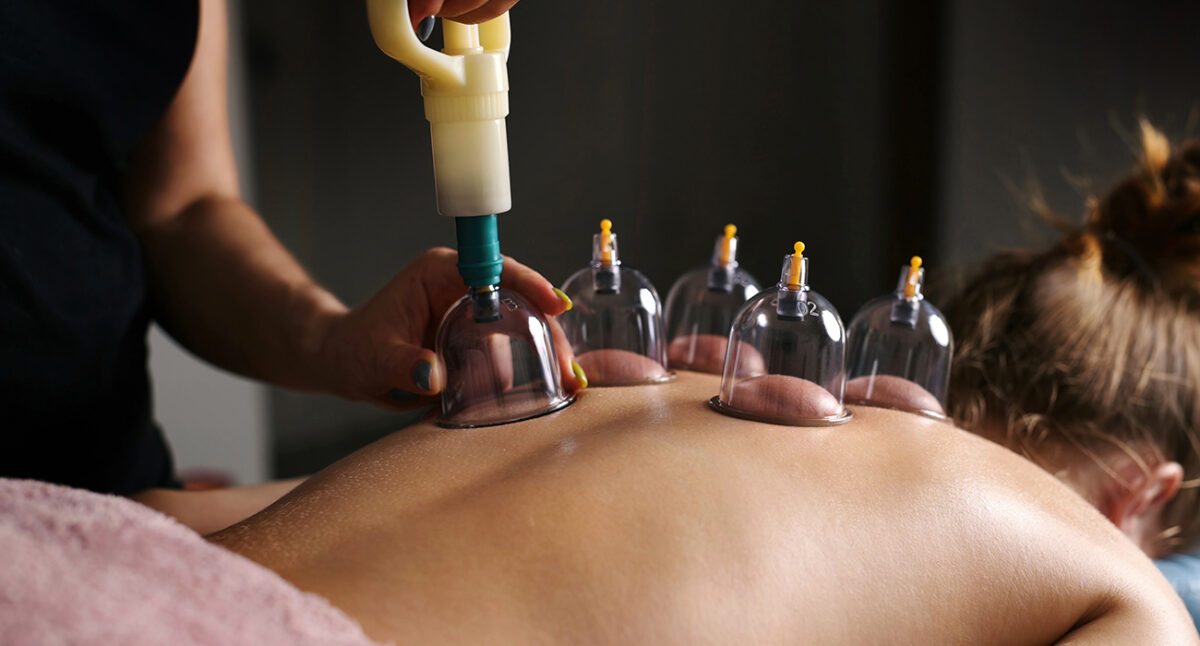
Cupping Therapy in Dubai at Yuan Qi is a gentle yet effective treatment using suction cups to improve circulation, relieve muscle tension, and remove toxins. Athletes and professionals alike use this therapy to enhance recovery and boost performance.

Moxibustion Therapy in Dubai involves the burning of mugwort near specific acupuncture points to stimulate energy flow (Qi), strengthen the immune system, and ease conditions like digestive issues, fatigue, or chronic pain. It’s a soothing, warming treatment that offers long-term benefits.

Hijama Therapy in Dubai, also known as wet cupping, is performed with strict hygiene and precision by trained experts at Yuan Qi. It involves the controlled removal of small amounts of stagnant blood to relieve inflammation, reduce stress, and enhance general wellbeing.

Yuan Qi Acupuncture stands out for its commitment to traditional techniques, clean facilities, and customized wellness plans. Whether you’re new to TCM or looking to deepen your healing journey, their treatments provide safe, natural alternatives to conventional medicine.

Book your consultation today and experience why Yuan Qi Acupuncture is a top choice for cupping therapy, moxibustion, and hijama in Dubai.

Categories
therapies

Managing Stress and Anxiety Naturally with Acupuncture

In today’s fast-paced world, stress and anxiety have become part of daily life for many people. Whether it’s due to work pressure, family responsibilities, financial concerns, or simply the demands of modern living, chronic stress can take a serious toll on both physical and emotional health. Many people turn to medications to manage these feelings, but others are seeking a more natural, longterm approach. At Yuan Qi Acupuncture, we help individuals manage stress and anxiety gently and effectively through the healing power of acupuncture.

Acupuncture is a holistic therapy rooted in Traditional Chinese Medicine that works by restoring balance in the body. In Chinese medicine, emotional well-being is closely tied to the smooth flow of Qi, or life energy. When this flow becomes blocked or disrupted—due to prolonged stress, poor sleep, or emotional strain—it can manifest as symptoms such as anxiety, restlessness, fatigue, insomnia, digestive problems, or muscle tension. Acupuncture helps restore this balance by stimulating specific points in the body that regulate the nervous system, improve circulation, and promote deep relaxation.

One of the most powerful effects of acupuncture is its ability to calm the mind and regulate the body’s stress response. By stimulating the parasympathetic nervous system, acupuncture helps the body shift from “fight or flight” into a state of “rest and digest.” This lowers cortisol levels, slows the heart rate, reduces muscle tension, and encourages the release of natural mood-enhancing chemicals like serotonin and endorphins. Many of our patients report feeling not just more relaxed after a session, but also clearer, lighter, and more emotionally balanced.

Unlike medication, which often only manages symptoms and can come with unwanted side effects, acupuncture works with the body to correct imbalances and support long-term emotional health. At Yuan Qi Acupuncture, we take a personalized approach to each patient. During your first visit, we will talk with you about your lifestyle, stress triggers, emotional health, sleep patterns, and diet, so we can create a treatment plan that truly fits your needs. This may include acupuncture, but also simple lifestyle suggestions or herbal support to strengthen your overall well-being.

Many people who receive regular acupuncture sessions for stress and anxiety not only feel calmer and more centered, but also notice improvements in sleep, digestion, energy levels, and even relationships. Because the mind and body are deeply connected, when one is supported, the other also benefits. Acupuncture offers a powerful reminder that true healing often begins with slowing down, listening to the body, and giving ourselves permission to heal naturally.

If you’ve been feeling overwhelmed, anxious, or emotionally drained, know that you’re not alone—and there are gentle, natural options available. At Yuan Qi Acupuncture, we’re here to support you on your journey toward balance, calm, and resilience. Let us help you reconnect with your center and restore peace to your mind and body. Book your consultation today and discover how acupuncture can help you feel like yourself again.

WhatsApp Call