Yuan Qi — Header
Categories
Blog

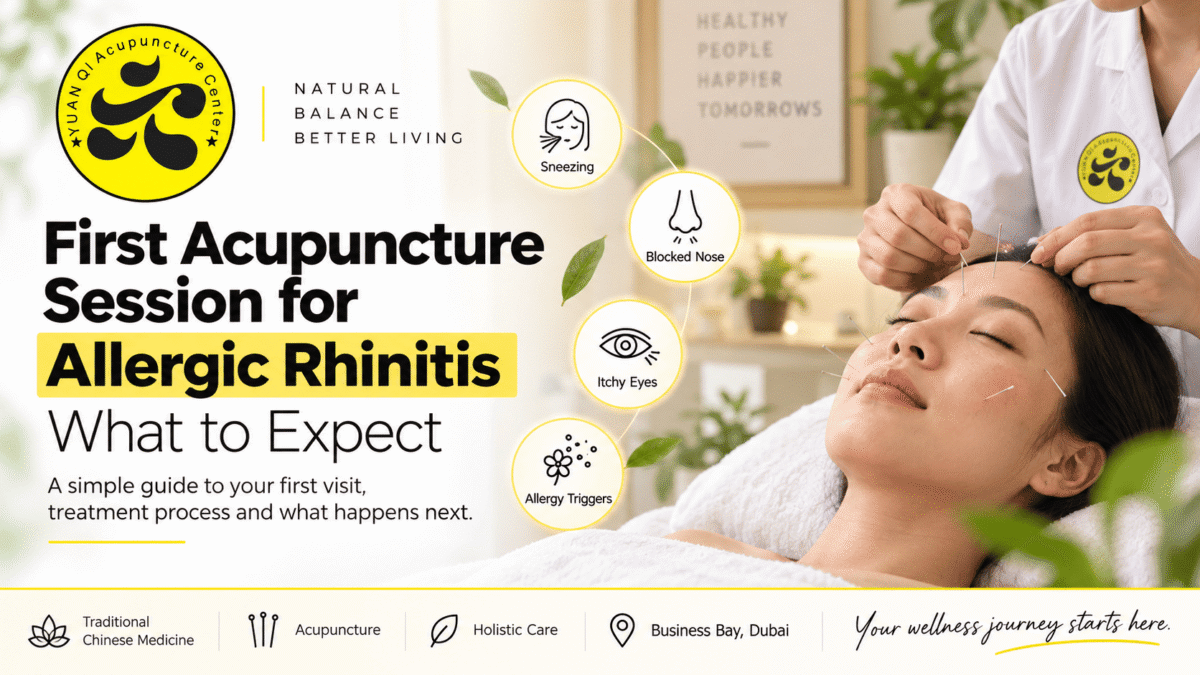
What to Expect During Your First Acupuncture Session for Allergic Rhinitis

Sneezing several times before you’ve even finished breakfast. A blocked nose that seems to return every morning. Itchy eyes. A runny nose. Poor sleep because you cannot breathe comfortably.

For someone living with allergic rhinitis, these symptoms can become part of everyday life.

You may already know which things tend to trigger your symptoms — dust, pollen, pets or changes in the environment. You may also be using antihistamines, nasal sprays or other treatments to keep them under control.

At some point, you might start wondering whether acupuncture could be another option worth exploring.

And if you have never tried acupuncture before, the next question is usually:

What actually happens during the first session?

The first appointment is generally much more about understanding you than simply placing needles.

Here is what you can expect.

First, What Exactly Is Allergic Rhinitis?

Allergic rhinitis occurs when the inside of the nose reacts to something you are allergic to.

Common triggers include:

  • pollen
  • house dust mites
  • animal dander
  • mould
  • certain workplace allergens

Typical symptoms include sneezing, an itchy nose, a blocked or runny nose and itchy or watery eyes. Symptoms may appear only during certain times of the year or continue throughout the year depending on the trigger.

Some people also find that their sleep, concentration or daily routine is affected when symptoms become persistent.

Acupuncture does not replace proper allergy diagnosis or conventional treatment, but some adults explore it as a complementary option for managing symptoms.

Your First Appointment Starts With a Conversation

Do not expect to walk into the treatment room and immediately have needles inserted.

A good first acupuncture appointment should begin with a proper consultation.

Your practitioner will want to understand what has actually been happening.

You may be asked questions such as:

  • When did your allergy symptoms begin?
  • Are they present throughout the year or only seasonally?
  • What usually triggers them?
  • Is congestion your main problem, or is it sneezing and itching?
  • Are your eyes affected?
  • Do symptoms interfere with your sleep?
  • Are you taking antihistamines or using nasal sprays?
  • Have you had allergy testing?
  • Do you have asthma, eczema or other allergies?
  • Are there other health concerns or medications your practitioner should know about?

These questions are not just small talk.

Two people can both have allergic rhinitis and still experience it very differently.

One person may wake every morning with a blocked nose. Another may be fine most of the year but struggle badly during a particular season.

The treatment approach should reflect those differences.

Your Practitioner May Also Ask About Things That Seem Unrelated

This sometimes surprises people during their first Traditional Chinese Medicine consultation.

You may be asked about:

  • sleep
  • digestion
  • energy levels
  • stress
  • appetite
  • general health
  • previous illnesses

From a Traditional Chinese Medicine perspective, practitioners do not only look at one isolated symptom.

They consider the broader pattern of the person’s health before choosing acupuncture points.

Depending on the practitioner, the consultation may also include traditional observations such as checking the tongue and pulse.

You do not need to understand all of this beforehand.

Your practitioner should explain what they are doing and why.

Will the Acupuncturist Confirm That You Have an Allergy?

This distinction is important.

An acupuncture consultation is not the same thing as formal allergy testing.

If you are not sure whether your symptoms are actually caused by an allergy, or if your symptoms are severe or persistent, you may need assessment by an appropriate medical professional.

Allergic rhinitis can sometimes resemble other forms of rhinitis, and identifying the cause matters.

If required, conventional allergy assessment can involve medical history, skin-prick testing or blood tests.

A responsible acupuncture practitioner should not discourage you from seeking medical investigation when it is appropriate.

What Happens Once the Consultation Is Finished?

If acupuncture is considered suitable, your practitioner will explain the treatment before starting.

You will normally lie comfortably on a treatment table.

Very fine, sterile, single-use acupuncture needles are inserted into selected points.

The points chosen vary.

They may depend on:

  • whether congestion or sneezing is more prominent
  • how long symptoms have been present
  • whether symptoms are seasonal or year-round
  • your general health
  • the treatment approach being used

Not every person with allergic rhinitis should automatically receive exactly the same set of acupuncture points.

Personalisation is an important part of the treatment.

Will Needles Be Put Into My Nose?

This is another question people often wonder about.

Standard acupuncture for allergic rhinitis does not necessarily mean needles will be inserted inside the nose.

Some acupuncture points commonly used in practice are located around the face or nose, while others may be elsewhere on the body.

The exact selection depends on the practitioner and treatment plan.

If you are nervous about any particular point, say so before treatment begins.

You should always understand what is being done.

Does Acupuncture Hurt?

Usually, this is the biggest concern before someone’s first appointment.

Acupuncture needles are very fine and are quite different from the hollow needles used for injections.

Some people barely notice insertion.

Others describe:

  • a brief pinching feeling
  • heaviness
  • warmth
  • tingling
  • a dull sensation around the point

These sensations are usually temporary.

If a needle feels genuinely painful or uncomfortable, tell your practitioner.

You do not need to stay silent because you think discomfort is simply part of the treatment.

How Long Does the First Appointment Take?

The first visit can take longer than follow-up appointments because the practitioner needs time to understand your history.

There may be time spent on:

  1. consultation
  2. symptom discussion
  3. health assessment
  4. treatment explanation
  5. acupuncture
  6. aftercare advice

The exact appointment length varies depending on the clinic and your individual needs.

Rather than focusing too much on the number of minutes, make sure enough time is allowed for your practitioner to understand your symptoms properly.

What Should You Do Before Your Appointment?

You do not need to make complicated preparations.

A few simple things can make the appointment more comfortable.

Eat beforehand

Try not to arrive extremely hungry.

A normal meal or light snack beforehand is usually sensible.

Wear comfortable clothing

Loose clothing makes it easier to access different acupuncture points without unnecessary discomfort.

Bring relevant medical information

If you have had allergy testing, medical reports or a list of medications, having them available can be useful.

Tell the practitioner what you take

Mention any:

  • antihistamines
  • nasal sprays
  • prescription medicines
  • supplements
  • blood-thinning medication

Do not stop prescribed medication simply because you are starting acupuncture unless the healthcare professional who prescribed it advises you to do so.

Avoid arriving rushed

If possible, give yourself enough time to arrive calmly.

Turning up late and stressed makes the first appointment harder for both you and the practitioner.

What Might You Feel After Acupuncture?

People respond differently.

Some feel relaxed after the session.

Others may feel slightly tired.

Minor temporary effects can include:

  • mild soreness
  • slight bruising
  • a small amount of bleeding at a needle site
  • light-headedness
  • tiredness

Serious complications from acupuncture are uncommon when it is performed properly by a trained practitioner using sterile equipment.

Your practitioner should explain anything they specifically want you to do after treatment.

Will One Session Stop Your Allergies?

This is where realistic expectations matter.

Probably not.

Allergic rhinitis is an allergic condition, and acupuncture should not be presented as a one-session cure.

Some people may notice changes sooner than others, but individual response varies.

A practitioner may recommend a course of treatment and then review how your symptoms are changing rather than promising a fixed outcome from the beginning.

Be cautious of claims such as:

“Your allergy will disappear after three sessions.”

No responsible healthcare practitioner can guarantee that for every person.

What Does Research Say About Acupuncture for Allergic Rhinitis?

There is some encouraging research, but it should be explained carefully.

The U.S. National Center for Complementary and Integrative Health notes that randomized trials suggest acupuncture may improve some allergic-rhinitis symptoms and quality of life. A previous review involving 13 studies and 2,365 participants found improvements in nasal symptom scores among people receiving acupuncture.

A larger 2022 systematic review involving 30 trials and more than 4,400 participants also found that acupuncture may improve nasal symptoms and quality of life in adults with allergic rhinitis. However, the researchers highlighted weaknesses in the underlying evidence and said additional high-quality trials are still needed.

In other words:

There is evidence suggesting acupuncture may help some adults with allergic-rhinitis symptoms, but it should not be marketed as a guaranteed cure.

That is the approach we believe patients deserve.

Can You Continue Your Allergy Medication?

In many cases, people use acupuncture alongside conventional allergy management.

That may include treatments such as:

  • antihistamines
  • steroid nasal sprays
  • saline nasal rinses
  • allergen avoidance

These remain established approaches for allergic rhinitis.

Tell your acupuncturist what medication you are using.

But decisions about changing or stopping medication should be discussed with the relevant doctor or pharmacist rather than made simply because acupuncture has been started.

Complementary care should complement appropriate medical treatment, not automatically replace it.

How Many Acupuncture Sessions Might You Need?

There is no single number that applies to everyone.

Treatment frequency can depend on:

  • how severe your symptoms are
  • whether they are seasonal or year-round
  • how long you have had them
  • your exposure to triggers
  • your overall health
  • how you respond to treatment

Instead of deciding beforehand that everybody needs six, eight or ten sessions, progress should be reviewed along the way.

Your practitioner should be able to explain why they are recommending a particular schedule.

What Can You Do Outside the Treatment Room?

Acupuncture is only one possible part of managing allergic rhinitis.

Knowing and reducing exposure to your triggers can be just as important.

Depending on your allergy, practical measures may include:

  • reducing exposure to dust mites
  • keeping the home well ventilated
  • dealing with damp or mould
  • washing bedding regularly
  • using appropriate cleaning methods
  • reducing exposure to pets when relevant
  • limiting pollen exposure when levels are high

The right approach depends on what actually triggers your symptoms.

If you have never established the cause of persistent symptoms, consider discussing allergy assessment with an appropriate healthcare professional.

When Should You See a Doctor?

Acupuncture should not delay conventional medical assessment.

Speak with a healthcare professional if:

  • you are not sure what is causing your symptoms
  • your symptoms are getting worse
  • symptoms are significantly affecting sleep or daily life
  • pharmacy treatment is not helping
  • you also have asthma and it is worsening

Severe allergic reactions are different from ordinary allergic rhinitis and may require urgent medical care.

Choosing an Acupuncture Clinic for Allergic Rhinitis in Dubai

If you are thinking about acupuncture, look at the practitioner rather than simply looking at advertising claims.

Ask:

  • Is the practitioner appropriately licensed?
  • What is their professional training?
  • Will they take a proper health history?
  • Are sterile, single-use needles used?
  • Will the treatment be personalised?
  • Will they explain realistic expectations?
  • Will they tell you when medical assessment is more appropriate?

You should feel comfortable asking questions before treatment begins.

Your First Allergy Acupuncture Consultation at Yuan Qi

At Yuan Qi Acupuncture Center in Business Bay, Dubai, the first step is a consultation.

The clinic is led by Dr. Jun Huang, who holds bachelor’s and master’s qualifications in acupuncture and is licensed by the Dubai Health Authority and Ministry of Health. Yuan Qi provides acupuncture and Traditional Chinese Medicine alongside other complementary services from its Business Bay clinic.

If you are dealing with recurring sneezing, nasal congestion or other allergy-related symptoms and would like to learn more, visit our dedicated Acupuncture for Allergic Rhinitis (Sinus Allergy) page.

There you can learn more about how Yuan Qi approaches allergic-rhinitis consultations and treatment.

Frequently Asked Questions

Can acupuncture cure allergic rhinitis permanently?

There is currently no basis for promising that acupuncture will permanently cure allergic rhinitis.

Research suggests it may help reduce symptoms for some adults, but responses vary and further research is still needed.

Can acupuncture help a blocked nose caused by allergies?

Some clinical research has reported improvements in nasal symptom scores in adults receiving acupuncture for allergic rhinitis. However, improvement cannot be guaranteed for an individual patient.

Do I need to stop antihistamines before acupuncture?

Do not stop medication simply because you are having acupuncture.

Tell your practitioner what you are taking and discuss medication changes with the doctor or pharmacist responsible for your treatment.

Can I have acupuncture if my allergies occur all year?

People with both seasonal and perennial allergic rhinitis have been included in acupuncture research.

Whether acupuncture is appropriate for you should be decided after an individual assessment.

Is acupuncture safe?

Acupuncture is generally considered safe when carried out properly by a trained practitioner using sterile, single-use needles, although minor temporary side effects can occur.

Will I feel better after my first session?

Some people may notice changes early, while others may not.

There is no reliable way to promise how quickly an individual person will respond.

Visit Yuan Qi Acupuncture Center in Dubai

If recurring allergy symptoms are affecting your sleep, work or everyday comfort and you would like to explore acupuncture as part of your care, you are welcome to speak with the team at Yuan Qi Acupuncture Center.

Our clinic is located in Business Bay, Dubai, and provides personalised acupuncture and Traditional Chinese Medicine consultations with licensed practitioners.

Yuan Qi Acupuncture Center
📍 M05, Sheikh Majid Building, Sheikh Zayed Road, Business Bay, Dubai, UAE
📞 +971 50 288 4479

For more information about acupuncture for allergic rhinitis or to arrange a consultation, visit Yuan Qi Acupuncture Center or contact our team directly.

Medical Note

This article is for general educational purposes only and is not intended to diagnose, prevent or treat a medical condition. Acupuncture is a complementary healthcare approach and should not delay appropriate medical care.

 

Categories
Blog

Best Foods for Fighting Fatigue: What to Eat for More Energy Naturally

The 3pm crash is so normal in Dubai that most people plan their day around it. Second coffee at 2. Something sweet from the pantry drawer. Then a slow hour of rereading the same three emails.

Food will not fix every kind of tiredness, and anyone who tells you otherwise is selling something. But if your day runs on iced coffee, a rushed sandwich and whatever is left in the fridge at 9pm, what you eat is one of the easier things to change. The best foods for fighting fatigue are not exotic and they are not expensive. Most of them are already in the supermarket you shop at every week.

Why you feel flat in the first place

A few of the usual causes, in plain language.

Blood sugar swings. A breakfast of white toast, jam and a milky coffee gives you a quick lift and then drops you an hour later. The crash feels like tiredness. It is really your body correcting a spike.

Low iron. Iron helps carry oxygen around your blood. When it runs low, you feel heavy and breathless on stairs you used to take without thinking. It is common, and it is worth a blood test rather than a guess.

Dehydration. You walk from an air-conditioned flat to an air-conditioned car to an air-conditioned office and never feel thirsty. Mild dehydration reads as brain fog and low energy long before it registers as thirst.

Caffeine covering the problem. Coffee borrows energy from later in the day. It does not create any.

A late, heavy dinner. Eating your largest meal at 10pm means your body spends the night digesting instead of resting.

How Chinese medicine reads low energy

In Traditional Chinese Medicine, energy is Qi. The clinic is named after Yuan Qi, the source Qi you are born with and spend across a lifetime. The Qi you make daily comes mostly from two things: what you breathe and what you eat.

The Spleen and Stomach are treated as the engine that turns food into usable energy. That engine works best on warm, cooked, simple food. Iced drinks, raw salads at every meal, heavy dairy and greasy takeaways make the job harder. When the engine is struggling, TCM describes it as dampness, and the symptoms are ones most people recognise: heaviness in the limbs, foggy thinking, bloating after meals, and tiredness that sleep does not clear.

This is not a rule against salad. It is a reason to make sure most of what you eat in a week is warm and cooked.

The best foods for fighting fatigue

Protein at breakfast. Eggs, Greek yoghurt, leftover chicken, or a bowl of lentils. Protein slows the sugar release from whatever carbohydrate sits next to it, which is the whole point. Swapping a pastry for two eggs on wholemeal toast changes how the next four hours feel.

Oats, brown rice and other slow carbohydrates. These release energy gradually instead of all at once. Porridge cooked with cinnamon is about as close as a Western breakfast gets to a TCM one: warm, soft, easy to digest.

Iron-rich foods with a squeeze of lemon. Red meat, liver, lentils, chickpeas, tofu and dark leafy greens. Iron from plants absorbs better alongside vitamin C, so lemon over your spinach or tomatoes in your lentils genuinely helps.

Red dates and goji berries. Both are staples in Chinese food therapy for building blood and Qi. Simmer a few red dates and a spoonful of goji in hot water and drink it like tea. Mild, sweet, and easy to keep up daily.

Sweet potato, pumpkin and squash. Yellow and orange root vegetables are considered warming and easy on the digestion. Roast a tray on Sunday and you have four days of side dishes.

Ginger, cinnamon and other warming spices. Fresh ginger in soup, cinnamon in porridge, a little black pepper. They add warmth to a meal without adding heat in the chilli sense.

Pumpkin seeds, almonds and walnuts. A small handful in the afternoon holds you until dinner far better than a biscuit does. Keep a jar at your desk so the decision is already made.

Soups, broths and congee. Congee is rice cooked down slowly with a lot of water until it is soft. It is what Chinese families eat when someone is run down, because it asks almost nothing of the digestion. A chicken and ginger soup does the same job.

Water, more of it than you think. Before you reach for a third coffee, drink a large glass of water and wait twenty minutes. A surprising amount of afternoon fatigue in this climate is simple thirst.

Green tea instead of the fourth coffee. Less caffeine, gentler curve, and no 4pm cliff. If you drink coffee, keep it before midday so it is out of your system by bedtime.

What quietly drains you

Sugar on an empty stomach. Iced everything, all day. Alcohol in the evening, which fragments sleep even when you fall asleep quickly. Skipping lunch and then eating two dinners. And long stretches of sitting, which slows circulation and makes you feel heavier than the work justifies.

A simple day, Dubai edition

Breakfast: Two eggs on wholemeal toast, or porridge with cinnamon and a few chopped dates. Water first, coffee second.

Mid-morning: Red date and goji tea, or plain water.

Lunch: Grilled chicken or fish, brown rice, cooked greens. Warm, not a cold desk salad.

Afternoon: A handful of nuts around 3pm, before the slump rather than during it.

Dinner: Something soupy and early. Lentil soup, a light curry with vegetables, or chicken broth with rice. Finish eating at least two hours before bed.

None of that is dramatic. It is meant not to be. Diet changes work when they are boring enough to repeat.

When tiredness needs more than a better lunch

See a doctor if you have been exhausted for several weeks despite sleeping properly, if you are breathless, if your weight has changed without you trying, if you feel low as well as tired, or if you wake unrefreshed every single morning. Basic blood tests for iron, thyroid function, vitamin D and B12 answer a lot of questions quickly. Food is worth sorting out, but it is not a substitute for finding out what is actually going on.

Where acupuncture fits

At our Business Bay clinic, people usually come to us about fatigue after they have already had the blood tests and been told everything looks normal, yet they still feel drained. Under Dr Jun Huang, our Medical Director, treatment is used as supportive care alongside your medical team, not instead of it. Sessions typically focus on sleep quality, digestion and stress load, since those three tend to be tangled together in anyone who has been running flat for months. We will also talk through your meals, because food therapy is part of TCM rather than an add-on to it.

If you want a second view on why your energy has dropped, book a consultation and bring your recent blood results with you.

FAQ

  • What are the best foods for fighting fatigue? Protein at breakfast, slow-release carbohydrates like oats and brown rice, iron-rich foods eaten with vitamin C, warm soups and broths, root vegetables such as sweet potato and pumpkin, nuts and seeds, and plenty of water. In Chinese food therapy, red dates and goji berries are added to support Qi and blood.
  • Does coffee help with fatigue? It masks it. Caffeine blocks the signal that tells you that you are tired, so the tiredness is still there once it wears off. Keep coffee to the morning and use water or green tea in the afternoon.
  • Why does Chinese medicine recommend warm food for low energy? The Spleen and Stomach are seen as the engine that converts food into Qi. Warm, cooked food is easier for that system to process than cold or raw food, so more of the meal becomes usable energy and less becomes heaviness.
  • How long before eating better makes a difference? Most people notice steadier afternoons within a week or two, mainly from fixing breakfast and hydration. Anything driven by low iron takes longer and needs proper testing.
  • Can acupuncture help with tiredness? It is used as supportive care for the things that often sit underneath fatigue, such as poor sleep, digestive discomfort and stress. It works best alongside medical investigation rather than in place of it.

Need Support Beyond Nutrition?

If you’ve been experiencing persistent fatigue that doesn’t improve with healthy eating, quality sleep, or stress management, it may be time to investigate the underlying cause. Discover our holistic care for Chronic Fatigue Syndrome in Dubai and learn how personalized treatment may help restore your energy and improve your quality of life.

Categories
Blog

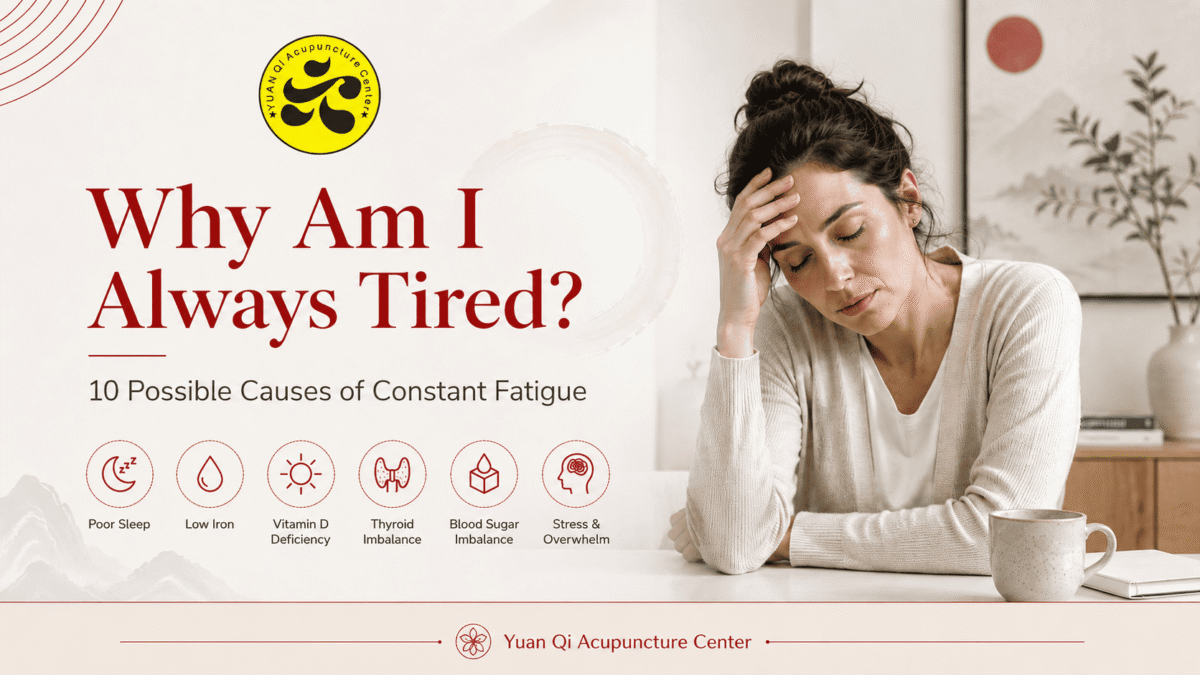
Why Am I Always Tired? 10 Causes of Constant Fatigue

Constant fatigue is tiredness that lasts for weeks or months and does not lift after a full night of sleep or a quiet weekend. It is one of the most common reasons people walk into our clinic in Business Bay, and it almost never comes down to one thing.

If you have been asking yourself why am I always tired, the answer is usually something ordinary that has gone unchecked for too long. Broken sleep. Low iron. A thyroid that has quietly slowed down. Blood sugar swinging up and down all day. Or months of stress your body has never been given a chance to come down from. Below are ten of the most common causes, the tests worth asking your doctor for, and the point at which tiredness stops being a lifestyle problem and starts needing proper medical attention.

Quick answer: tiredness that has lasted more than two to three weeks and does not improve with rest deserves a blood test, not another coffee. Most cases turn out to be sleep quality, iron, vitamin D, thyroid, blood sugar, hormones or stress load, and all of those can be checked.

What counts as being tired all the time?

Being tired all the time means fatigue that lasts for weeks, has no obvious cause you can point to, and does not improve after rest. Normal tiredness is different. It follows a late night or a hard week, and it clears once you catch up.

Constant fatigue tends to look like this:

  • Waking up feeling as though you never slept
  • Needing caffeine to function rather than to enjoy it
  • Brain fog, losing words, rereading the same email
  • Heavy limbs, or exercise that suddenly feels much harder than it used to
  • Catching every cold going round the office
  • Wanting to nap by mid-afternoon most days

If that has been your normal for a month or more, it is worth investigating rather than absorbing.

Why am I always tired even when I sleep eight hours?

Because hours in bed are not the same as hours of restorative sleep, and because sleep is only one of the things your energy depends on. Your body also needs enough iron to carry oxygen around, thyroid hormone to set the pace of your metabolism, steady blood sugar for fuel, and a nervous system that is not stuck in alert mode. If any one of those is off, eight hours will not rescue you.

10 possible causes of constant fatigue

1. Your sleep is long but broken

Snoring, waking with a dry mouth or a headache, getting up twice a night, or a partner who says you stop breathing for a moment. Sleep apnoea is common, frequently missed, and leaves people exhausted no matter how long they spend in bed. It is worth raising with a doctor, who can arrange a sleep study.

The everyday version matters too: scrolling in bed, a heavy dinner at 10pm, a nightcap that knocks you out but stops you reaching deep sleep, or a bedroom the air conditioning keeps at the wrong temperature. Alcohol sedates. It does not restore.

2. Low iron and anaemia

Iron carries oxygen around your body. When it runs low you get tired, breathless on the stairs, cold-handed, pale, and your hair may start shedding more than usual. It is common in women with heavy periods, in vegetarians and vegans, after pregnancy, and in people training hard for endurance events.

One thing worth knowing: you can have depleted iron stores and still have a normal full blood count. Ask for ferritin specifically, not just haemoglobin.

3. Low vitamin D

Most of us here work indoors, drive everywhere, and stay out of the sun for half the year. Low vitamin D shows up as fatigue, aching muscles, low mood and more frequent infections. It is a simple blood test and an easy fix once you know your level. Guessing at a high strength supplement without testing first is not the way to do it.

4. An underactive or overactive thyroid

An underactive thyroid slows everything down: fatigue, weight creeping up, feeling cold when nobody else is, constipation, dry skin, thinning hair, heavier or irregular periods, low mood. An overactive thyroid can be just as exhausting, but comes with a racing heart, weight loss, anxiety and shaky hands.

Ask for TSH, and free T4 as well if symptoms are clear or thyroid problems run in your family.

5. Blood sugar problems

Energy crashes at 11am and again at 3pm, waking at 3am, unusual thirst, needing the toilet at night, constant sugar cravings. Insulin resistance and type 2 diabetes are common across the region and can run quietly for years before anyone checks. HbA1c and a fasting glucose test will tell you where you stand.

In younger people, type 1 diabetes comes on faster and looks different: heavy thirst, frequent urination and weight loss over weeks. That needs a doctor straight away, not a wellness plan.

6. Dehydration, skipped meals and too much caffeine

You step from an air-conditioned office into 45 degrees and back again, and you almost certainly drink less water than you think. Add a skipped breakfast, a heavy late lunch, and four flat whites to get through the afternoon, and your energy has nowhere to go but up and down. Caffeine does not create energy. It borrows it, and the interest is paid the following morning.

7. Chronic stress and burnout

Long hours, no genuine days off, and a phone that never stops. The body holds stress hormones high, sleep turns shallow, digestion suffers, and you end up wired at midnight and flat by 10am. Burnout is exhaustion that rest does not fix, because the demand never lets up long enough for rest to work.

It is not a personality flaw and it does not mean you are weak. It means the load has been too high for too long.

8. Low mood and anxiety

Fatigue is one of the most common physical signs of low mood, and it often turns up before anyone puts a name to what is going on. If you are tired and also getting less pleasure out of things you used to enjoy, sleeping far more or far less than usual, or finding it hard to concentrate, that is worth talking through with a doctor.

Support helps. Traditional Chinese Medicine is used alongside that kind of care, never as a substitute for it.

9. Hormonal changes

Perimenopause brings fatigue, night sweats, broken sleep and mood changes, often starting in the early forties and often years before periods stop. PCOS commonly pairs tiredness with irregular cycles and insulin resistance. After childbirth, blood loss, disrupted sleep and thyroid changes can stack on top of each other. In men, low testosterone shows up as fatigue, low drive and losing strength in the gym.

All of these are measurable. None of them should be filed under “just getting older” without a test.

10. Post-viral fatigue and chronic fatigue syndrome

After a viral infection, some people bounce back in a week and others take months. When exhaustion carries on beyond six months, does not improve with rest, and reliably gets worse after activity, doctors may look at chronic fatigue syndrome, also called ME/CFS. The instinct to push through usually backfires. Pacing works better.

Other things worth checking

  • Medication side effects. Antihistamines, some blood pressure medicines, sedating painkillers and certain antidepressants all cause drowsiness. Never stop a prescription on your own, ask the prescriber.
  • Vitamin B12 and folate, especially if you eat little or no meat, or take long-term acid reducers.
  • Coeliac disease and other absorption problems, particularly if bloating, loose stools or unexplained weight change come with the tiredness.
  • Alcohol, even a couple of glasses most evenings.
  • Doing very little. Fatigue makes you move less, and moving less makes fatigue worse. It is a loop that needs breaking gently.
  • Heart, kidney and liver conditions, and any infection that has never quite cleared.

    When should I see a doctor about constant fatigue?

    See a doctor promptly if your tiredness comes with any of the following:

    • Weight loss you cannot explain
    • Breathlessness, chest pain or a pounding heart
    • Night sweats, or a fever that keeps returning
    • A new lump anywhere on the body
    • Blood in your stool or urine
    • Severe headaches, or changes in your vision
    • Fatigue that started after a head injury
    • Fainting, or feeling like you are about toBook an appointment in the ordinary way if fatigue has lasted more than two or three weeks with no clear reason. Ask for blood tests rather than reassurance.And if you are finding it hard to cope day to day, please speak to a doctor or someone you trust rather than waiting it out on your own.

      Which blood tests are worth asking for?

      Take this list to your doctor as a starting point for the conversation. It is not a self-diagnosis kit, and which tests make sense depends on your symptoms and history.

      TestWhat it looks at
      Full blood countAnaemia, infection, general blood picture
      FerritinIron stores, which can be low before anaemia shows
      Vitamin DDeficiency, common among people who work indoors
      Vitamin B12 and folateDeficiencies that cause fatigue and brain fog
      TSH, plus free T4Thyroid function
      HbA1c and fasting glucoseBlood sugar control over recent months
      Kidney and liver functionOrgan function that can drive tiredness
      CRP or ESRInflammation somewhere in the body
      Coeliac screenIf there are digestive symptoms alongside the fatigue
      Hormone panelWhere cycle changes, menopause symptoms or low testosterone are suspected


      How does Traditional Chinese Medicine explain constant fatigue?

      In Traditional Chinese Medicine, tiredness that lingers is described as a shortage or a blockage in the flow of Qi, the body’s working energy. Practitioners look for the pattern behind it rather than treating fatigue as one condition. A few come up repeatedly:

      • Spleen Qi deficiency. Tired after eating, bloating, loose stools, heavy limbs, a foggy head.
      • Kidney Yang deficiency. Cold hands and feet, a dull ache in the lower back, feeling worse in over-cooled offices, low drive.
      • Liver Qi stagnation. Stress-driven, irritable, tight shoulders, worse in the days before a period.
      • Blood deficiency. Pale, light-headed on standing, poor sleep, often after heavy periods or childbirth.

      These are TCM descriptions, not medical diagnoses. They sit alongside your blood results, they do not replace them.

      Can acupuncture help if I am always tired?

      Acupuncture is used as complementary care for fatigue, mostly by working on what surrounds it: sleep quality, stress load, pain, digestion and menstrual symptoms. The research is mixed and most of the studies are small, so we are not going to tell you it cures fatigue. What we see in clinic is more modest and more useful. When people start sleeping properly and their stress comes down, energy tends to follow.

      It works best next to a proper medical work-up, not instead of one. If your fatigue is being caused by low iron or an underactive thyroid, acupuncture is not the answer to that. The blood test and the treatment for it are.

      What happens if you come to Yuan Qi with constant fatigue

      You start with a consultation with Dr. Jun Huang, who is licensed by both the Dubai Health Authority and the Ministry of Health. He will go through your history, sleep, digestion, stress, and menstrual cycle where relevant, then check your tongue and pulse in the traditional way.

      If something in that picture points to a medical cause that has never been tested, we will say so and tell you to get it checked. From there, a plan might combine acupuncture, moxibustion, Tui Na massage, cupping and Chinese herbal medicine. If pain or deconditioning is part of why you feel wrecked, our physiotherapist Dr. SuryaLakshmi works on that side of it. You get a realistic timeline after the first visit, not a package sold on the phone.

      What helps while you wait for answers

      • Get up at the same time every day, including weekends. Fixing the wake time does more than fixing the bedtime.
      • Get daylight on your face early. Ten minutes outside before the heat builds is enough.
      • Eat protein at breakfast rather than a pastry and a coffee.
      • Drink more water than feels necessary. The climate here hides dehydration well.
      • Stop caffeine by early afternoon and see what happens to your sleep within a week.
      • Gentle and regular beats hard and occasional when you are running on empty.
      • Keep naps short and early. A long late nap borrows from tonight.

      The short version

      • Constant fatigue is tiredness that lasts weeks and does not improve with rest.
      • The usual suspects are sleep quality, iron, vitamin D, thyroid, blood sugar, hormones, stress and low mood.
      • Most of them are found with a straightforward blood test.
      • Red flag symptoms mean a doctor now, not a wellness plan.
      • TCM and acupuncture are complementary support that work alongside medical care, not in place of it.

  “Book a consultation with Dr. Jun Huang“

Visit Us

M05, Sheikh Majid Building, Sheikh Zayed Rd, Business Bay, Dubai, UAE

+971 50 288 4479

yuanqiacupuncture@gmail.com

Book Now


FAQs

  1. Why am I always tired even though I sleep enough?

Because hours in bed are not the same as restorative sleep, and because energy depends on more than sleep alone. Low iron, an underactive thyroid, unstable blood sugar, vitamin D deficiency, untreated sleep apnoea and long-term stress will all leave you exhausted after a full eight hours.

  1. How long does tiredness have to last before I should see a doctor?

As a rough guide, more than two to three weeks with no obvious explanation. Sooner if it comes with weight loss, breathlessness, night sweats, a fever that returns, a new lump, or blood in your stool or urine.

  1. What is the most common cause of constant fatigue?

There is no single winner. Poor sleep quality, iron deficiency, vitamin D deficiency, thyroid problems and chronic stress account for a large share of cases, and it is common to have two or three of them at once.

  1. Can low iron make you tired without being anaemic?

Yes. Iron stores can run low well before a full blood count looks abnormal. Ask specifically for a ferritin test rather than relying on haemoglobin alone.

  1. Which vitamin deficiency causes tiredness?

Vitamin D, vitamin B12, folate and iron are the usual ones. All four are checked with a standard blood test.

  1. Can a thyroid problem make me tired all the time?

Yes. An underactive thyroid causes fatigue, weight gain, feeling cold, dry skin and low mood. An overactive thyroid is also exhausting, but tends to come with a racing heart, weight loss and anxiety. A TSH test is the starting point.

  1. Is being tired all the time a sign of diabetes?

It can be. Fatigue alongside unusual thirst, needing the toilet at night, blurred vision or slow-healing cuts is worth checking with an HbA1c and fasting glucose test.

  1. Why am I tired straight after eating?

Large, refined-carbohydrate meals cause a blood sugar spike and dip that leaves you flat an hour later. Persistent post-meal tiredness can also point to insulin resistance or a digestive issue, so it is worth mentioning to your doctor.

  1. Is adrenal fatigue a real medical condition?

It is not a recognised medical diagnosis, and endocrine specialists do not use the term. The symptoms people describe are real, but they are usually explained by sleep, thyroid, iron, blood sugar or long-term stress. Adrenal insufficiency, on the other hand, is a genuine and rare condition that a doctor can test for.

  1. Can stress on its own cause physical exhaustion?

Yes. Sustained stress keeps the body in an alert state, which disrupts sleep, digestion and recovery. Over months that produces real physical exhaustion, not just a low mood.

  1. Is acupuncture safe if I am taking medication?

Generally yes, but tell us everything you take at the consultation, including supplements. If Chinese herbal medicine is being considered, that matters even more, because some herbs interact with prescription medicines.

  1. Can I have acupuncture while pregnant?

Acupuncture can be used in pregnancy with certain points avoided. Always tell the practitioner you are pregnant, or think you might be, before treatment begins.

  1. Do I need a referral to book at Yuan Qi?

No. You can book directly by phone, WhatsApp or through the website, and your first visit is a full assessment.

Categories
Blog Accupuncture in Dubai

Does Acupuncture Help Back Pain? What You Should Know Before Your First Session

does acupuncture help back pain - Yuan Qi Acupuncture
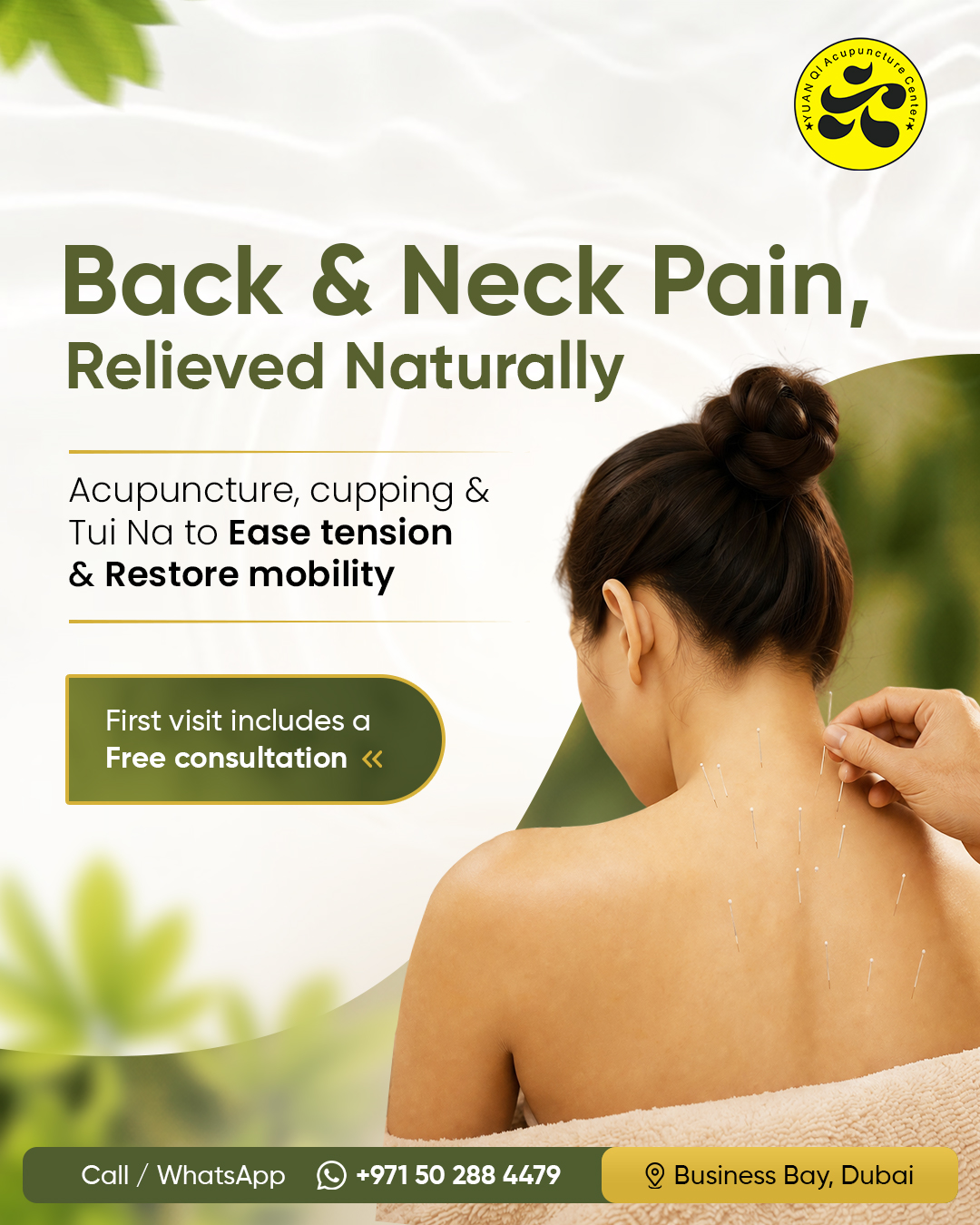
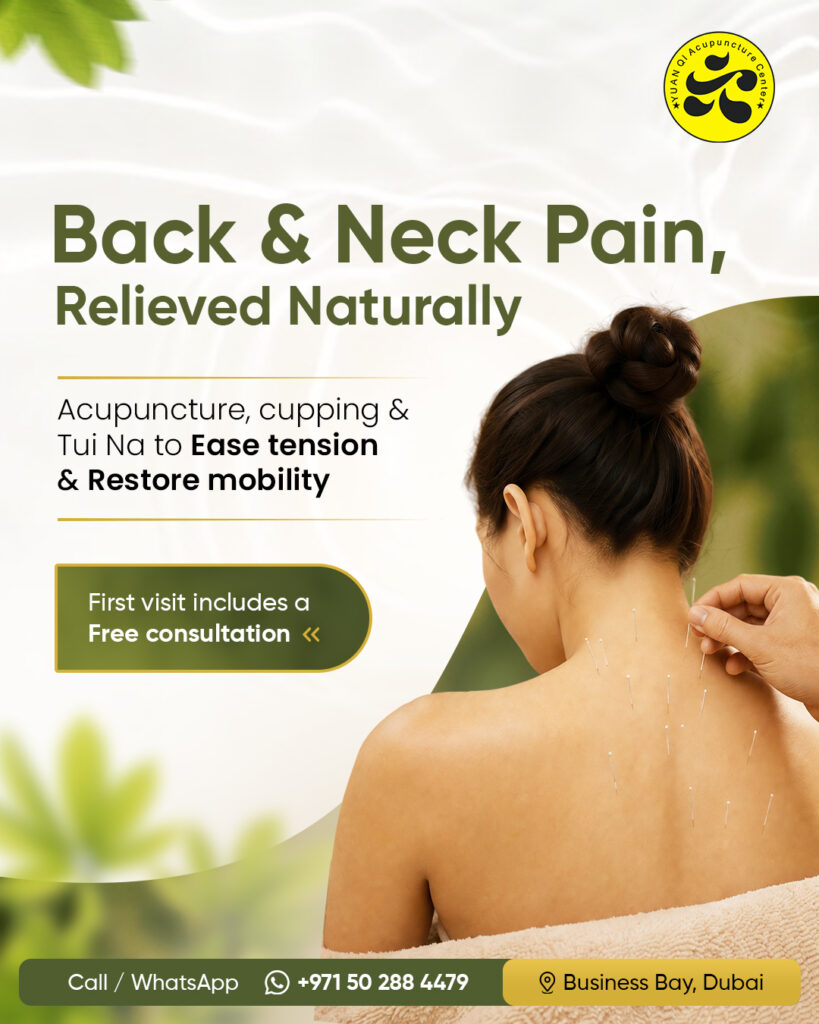
Back & Neck pain

Back pain can start quietly.

Maybe you notice a little stiffness when you get out of bed. Maybe your lower back begins aching halfway through the workday. Or perhaps the discomfort has been around for months and keeps returning whenever you think it has finally settled.

For many people, the first response is simple: rest, painkillers, stretching, or waiting for it to pass.

Sometimes it does.

Sometimes it doesn’t.

When back pain becomes persistent, people often begin looking at other options, and acupuncture is usually one of them.

So, does acupuncture actually help back pain?

For some people, it may. Acupuncture has been studied as a complementary approach for lower-back pain, particularly persistent or chronic pain. But it is important to understand that back pain is not one single condition, and no treatment works the same way for everyone.

The first step is understanding what may be causing your pain.

Why Your Back Pain May Be Different From Someone Else’s

Two people can both complain of lower-back pain and still have completely different problems.

One person may spend eight or nine hours sitting at a desk each day. Another may have strained their back while exercising. Someone else may feel pain travelling from the lower back into the buttock or leg.

Back discomfort can be associated with things such as:

  • muscle tension or strain
  • long periods of sitting
  • repetitive lifting
  • reduced mobility
  • previous injuries
  • age-related changes
  • poor movement habits
  • irritation involving the spine or surrounding tissues

This is why simply saying, “I have back pain,” doesn’t tell the whole story.

Before treatment is considered, it helps to understand where the pain is, how long it has been there, what makes it worse, whether it travels anywhere else, and whether there has already been a diagnosis.

At Yuan Qi Acupuncture Center in Dubai, these are some of the things discussed during the initial consultation before an individual treatment plan is considered.

How Is Acupuncture Used for Back Pain?

Acupuncture involves placing very fine needles into selected points on the body.

In Traditional Chinese Medicine, those points are selected according to the individual’s symptoms and the pattern identified by the practitioner.

From a modern research perspective, acupuncture has also been studied for its possible effects on pain signalling, the nervous system and the body’s natural pain-regulating mechanisms.

What acupuncture should not be presented as is a guaranteed cure.

Some people with lower-back pain report improvements in discomfort, movement or day-to-day function. Others notice only modest changes, and some may not find acupuncture helpful at all.

That difference matters.

A responsible practitioner should assess how you respond to treatment rather than promise that a certain number of needles or sessions will permanently fix your back.

What Does the Research Say?

Acupuncture has been researched quite extensively for lower-back pain.

Some reviews have found that it may provide modest benefits for people living with chronic low-back pain, particularly when compared with receiving no treatment.

However, medical guidelines do not all reach exactly the same conclusion.

Some healthcare organisations consider acupuncture a possible non-drug option for certain people with chronic low-back pain, while others do not recommend it routinely.

That is why we think it is more useful to look at acupuncture as a complementary treatment, rather than an alternative to proper medical assessment.

If you have already seen an orthopaedic doctor, neurologist or physiotherapist, acupuncture may sometimes be used alongside your existing care when appropriate.

What Kind of Back Problems Do People Seek Acupuncture For?

People come to acupuncture clinics with many different complaints.

Lower-back tension

This is particularly common among people who spend much of the day sitting.

And in Dubai, that can mean several hours at a desk followed by more time sitting in traffic.

By the end of the day, the lower back and hips may feel tight, stiff or uncomfortable.

Back pain that keeps returning

Some people feel better for a week or two and then the same discomfort comes back again.

Recurring pain is a good reason to look beyond temporary relief and understand what may actually be contributing to the problem.

Neck and upper-back tightness

Long hours on laptops and phones often affect more than the lower back.

The neck, shoulders and upper back can become tight as well, particularly when people spend most of the day in the same position.

Muscle-related back discomfort

Tight or overworked muscles around the back and hips can sometimes make movement uncomfortable or restricted.

Sciatica and radiating pain

Sciatica is different from ordinary muscular back pain.

The discomfort may travel from the lower back or buttock into the leg and can sometimes be accompanied by tingling, numbness or weakness.

If your pain travels down the leg, it is worth reading our dedicated information about sciatica and disc-related pain, because the assessment and treatment considerations may be different.

What Happens During Your First Acupuncture Appointment?

If you have never had acupuncture before, it is completely normal to wonder what actually happens.

The appointment should begin with a conversation.

Your practitioner may ask:

  • Where exactly do you feel the pain?
  • When did it begin?
  • Does it stay in your back or travel elsewhere?
  • Which movements make it worse?
  • Have you had any previous injuries?
  • Have you had scans or medical investigations?
  • Are you currently taking medication?
  • How active are you?
  • How are you sleeping?

The answers help build a clearer picture of what is going on.

If acupuncture is considered appropriate, very fine needles are then placed at selected points.

Some may be around the back or surrounding muscles. Others may be placed elsewhere depending on the treatment approach being used.

Does Acupuncture Hurt?

Usually, people are more worried about the needles before their first session than after it.

Acupuncture needles are much finer than the needles used for injections or blood tests.

You may feel a brief sensation as the needle goes in. Some people describe warmth, tingling, heaviness or a dull feeling around the acupuncture point.

Others barely notice the needles and end up relaxing during the session.

If something feels uncomfortable, tell your practitioner.

You should never feel that you simply have to tolerate pain during treatment.

How Many Sessions Will I Need?

This is one of the most common questions we hear, but there is no single number that applies to everyone.

A person who developed mild back tension last week is very different from someone who has been dealing with chronic pain for several years.

The number of sessions may depend on:

  • how long the problem has been present
  • the cause of the pain
  • how severe the symptoms are
  • your overall health
  • whether other conditions are involved
  • how your body responds to treatment

Some people notice a change relatively early.

Others may need several sessions before they can properly judge whether acupuncture is helping.

The important thing is that your progress should be reviewed.

Be careful with anyone who guarantees that your back pain will disappear after exactly three, five or ten sessions.

Real healthcare is rarely that predictable.

Can Acupuncture and Physiotherapy Be Used Together?

Sometimes.

The two treatments have different roles.

Physiotherapy may focus more on movement, mobility, strength, rehabilitation and correcting physical patterns that contribute to pain.

Acupuncture may be used as another part of the overall treatment approach.

At Yuan Qi, both acupuncture and physiotherapy are available within the same clinic, which can be useful when a patient may benefit from more than one type of care.

That doesn’t mean everyone needs both.

The decision should depend on your individual condition.

What About Cupping, Tui Na or Other TCM Therapies?

Traditional Chinese Medicine includes more than acupuncture.

Depending on your assessment, a practitioner may sometimes recommend therapies such as:

Cupping therapy — cups are placed on the skin to create suction.

Tui Na — a traditional Chinese manual therapy using pressure and movement techniques.

Moxibustion — a traditional technique that uses controlled warmth around selected acupuncture points.

These treatments should have a reason for being included.

Adding more therapies does not automatically mean better results.

Your practitioner should be able to explain why a particular treatment is being recommended for you.

When Back Pain Should Be Checked by a Doctor First

Most everyday back pain is not an emergency.

But certain symptoms should not simply be treated with acupuncture without medical assessment.

Seek prompt medical attention if back pain is associated with:

  • new or worsening weakness in the legs
  • increasing numbness
  • loss of sensation around the groin area
  • changes in bladder or bowel control
  • unexplained fever
  • unexplained weight loss
  • severe pain after a significant injury
  • rapidly worsening pain
  • a history of cancer together with new or unusual back pain

Sudden neurological symptoms need proper medical evaluation.

Acupuncture should never delay urgent medical care.

Is Acupuncture Safe?

When performed by a properly trained practitioner using sterile, single-use needles, acupuncture generally has a good safety record.

Minor effects can still happen.

Some people experience slight soreness, mild bruising, a tiny amount of bleeding, tiredness or temporary light-headedness after treatment.

Serious complications are uncommon, but acupuncture is not completely risk-free.

Always tell your practitioner if you:

  • are pregnant
  • take blood-thinning medication
  • have a bleeding disorder
  • have another significant medical condition
  • are taking regular medication

At Yuan Qi Acupuncture Center, treatments are provided by licensed practitioners and carried out using appropriate clinical and hygiene standards.

Treatment Is Only Part of Looking After Your Back

Acupuncture can be one part of managing back pain.

But sometimes the reason the pain keeps returning is still waiting for you when you leave the clinic.

Your desk.

Your driving position.

Your gym technique.

Your lack of movement.

Your sleep.

Your workload.

Your training routine.

Depending on the reason for your pain, a longer-term approach may also involve strengthening, mobility work, physiotherapy, ergonomic changes, regular movement, better recovery or conventional medical treatment.

The aim shouldn’t simply be to make your back feel better for a few hours.

The bigger question is:

Why does it keep hurting, and what can realistically be changed?

How to Choose an Acupuncturist for Back Pain in Dubai

Don’t choose an acupuncture clinic simply because its website says it is “the best.”

Look at the person who will actually be treating you.

Check:

  • Are they appropriately licensed?
  • What professional training do they have?
  • Do they regularly treat musculoskeletal complaints?
  • Do they take a proper medical history?
  • Do they use sterile, single-use needles?
  • Do they explain the treatment plan?
  • Are they willing to tell you when medical assessment is needed?

A good practitioner should also be comfortable saying:

“Acupuncture may not be the right first step for this.”

That is part of responsible healthcare.

Back Pain Acupuncture at Yuan Qi in Dubai

Yuan Qi Acupuncture Center is located in Business Bay, Dubai, and provides acupuncture and Traditional Chinese Medicine services for people with a range of musculoskeletal concerns.

Treatment begins with an individual consultation.

Rather than treating every case of back pain in exactly the same way, the practitioner considers the nature of the discomfort, your health history and any existing medical diagnosis before deciding what may be appropriate.

Depending on your condition, acupuncture may be used on its own or alongside other services available at the clinic, including physiotherapy and selected Traditional Chinese Medicine therapies.

If back or neck discomfort has been affecting your work, sleep, exercise or everyday activities, you can learn more about our Acupuncture for Back & Neck Pain in Dubai treatment or speak with our team about booking an assessment.

Frequently Asked Questions

Can acupuncture permanently cure back pain?

There is no responsible way to promise a permanent cure.

Back pain can have many causes, and people respond differently to treatment. Acupuncture may form one part of a broader pain-management or rehabilitation plan.

Is acupuncture better for chronic or recent back pain?

Acupuncture has been studied for both acute and chronic low-back pain, although evidence and clinical recommendations vary.

How long you have had the pain is only one part of the assessment.

Can I have acupuncture if I have a slipped disc?

Possibly, but the diagnosis alone doesn’t determine whether acupuncture is appropriate.

Your symptoms matter.

If you have significant weakness, worsening numbness, problems controlling your bladder or bowel, or other neurological symptoms, seek medical assessment promptly.

Can I exercise after acupuncture?

Most people can continue with normal daily activities.

Whether you should do strenuous exercise depends on your condition, the type of training you do and how you feel after treatment.

Can acupuncture help if my back pain comes from sitting all day?

People with desk-related back and neck discomfort do seek acupuncture.

However, treatment should usually be considered alongside changes such as improving your workstation, moving more frequently and addressing strength or mobility issues.

Can acupuncture and physiotherapy be done together?

Yes, in some cases.

Whether combining them makes sense depends on your diagnosis, symptoms and treatment goals.


For more information about our treatments or to book an appointment, visit our clinic or contact the Yuan Qi team directly.

Book your appointment today and speak with our licensed practitioners about the most appropriate treatment approach for your condition.

Contact Details

WhatsAppCall